

Transformers Timeline Explained: From Cybertron to Earth
Most people who get into collecting Transformers kits don't plan it. There's usually one specific moment—a birthday gift, a shelf spotted at a friend's place, an old box found at the back of a parent's attic. Then suddenly it's midnight and you're watching comparison videos about two kits that look nearly identical but somehow also feel completely different.
That's just how it starts. And the reason the hobby holds on is the same reason the franchise itself has been running continuously since 1984: there's always one more character worth knowing about, and always something new worth adding to the shelf.
Blokees Transformers model kits sit directly in that collector sweet spot—snap-fit, no tools required, poseable, and varied enough across series that there's always a next step worth considering. This guide covers forty years of Transformers toy history and walks through the current Blokees lineup in practical detail so you know exactly where to start.
|
1984 Year the franchise launched |
100+ Characters by the late 1980s |
6+ Active Blokees series |
2024 National Toy Hall of Fame |
The Origins of Transformers Toys (1984–1990)

The 1984 launch wasn't an original idea. It was two Japanese toy lines—Diaclone and Micro Change—relicensed for the American market. What those originals didn't have was a war. Bob Budiansky, a Marvel Comics writer brought in to name and define the characters, crafted a Cybertronian civil war mythology that gave every single kit a reason to exist beyond its physical engineering.
That backstory is what separated Transformers from every competitor that spent the next decade trying to catch it. Other toy lines had vehicles that changed shape. None of them had Optimus Prime—a character with an actual moral philosophy, voiced by Peter Cullen with the kind of quiet conviction that makes you believe he genuinely means it. Kids didn't just want the semi-truck. They wanted Prime. Megatron came packaged as the reason you needed him.
The animated series debuted the same year and ran in syndication five days a week. Not weekend reruns—five weekdays, every week. That frequency meant kids didn't just occasionally encounter these characters; they grew up alongside them. By 1986, the franchise had already produced an animated theatrical film that killed Optimus Prime on screen. The fan reaction—from children—was intense enough that the toy company received letters from parents. Prime was brought back.
By 1989, the lineup had grown to well over 100 characters across multiple waves. The Strong National Museum of Play inducted Transformers into the National Toy Hall of Fame in 2024—placing it alongside toys that shaped American childhood in a way the institution can actually document and verify.
|
📅 1984–1990 at a Glance |
|
The Golden Age of Transformers Toys (1990–2000)

Generation 2 launched in 1992 and was honest about what it was: a commercial bridge. Updated paint on familiar characters, some revised accessories, not much else. It didn't reinvent anything, but it kept the line in retail long enough to arrive at what came next.
Beast Wars in 1995 was genuinely surprising. Nobody working on the franchise at the time was predicting animals. Replacing Optimus Prime with a gorilla—even a different Optimus, a Maximal named Primal—should have been a brand-ending mistake. It wasn't. The accompanying CGI animated series ran for three seasons with a continuous narrative that connected back to G1 continuity in ways that rewarded longtime fans while staying accessible to kids who'd never seen the original show. The kits sold because the series was good. That's the simplest explanation.
The Beast Wars lineup felt physically different to display. Animal modes with organic shapes and surface textures alongside robot modes that shared the same underlying structure. Characters introduced in this period—Dinobot, Rattrap, Tarantulas, Blackarachnia—have never fully left the franchise. Several appear in the Blokees Classic Class lineup right now.
Beast Machines followed in 1999 with a darker tone and a divisive reception among fans who had loved Beast Wars. Robots in Disguise ran as a lighter standalone alongside it. By 2000, at least four distinct Transformers continuities were running simultaneously, and a growing community of collectors had started developing fan wikis just to track the connections between them.
|
Beast Wars Era (1995–2000) |
⚙️ G1 Era (1984–1990) |
|
|
Characters |
Animal modes + robot modes; organic surface textures |
Vehicle modes + robot modes; geometric, blocky design |
|
Story |
Three-season CGI series; continuous narrative |
Daily syndicated series; episodic with ongoing war arc |
|
New characters |
Maximals, Predacons, later Vehicons |
Autobots, Decepticons — 100+ by decade end |
|
Legacy kits |
Dinobot, Blackarachnia, Rattrap — still in Classic Class |
Optimus Prime, Megatron, Bumblebee, Soundwave, Starscream |
Transformers Toys in the Modern Era (2000–Present)

The Unicron Trilogy—Armada, Energon, Cybertron—ran from 2002 to 2006 and has a complicated reputation among collectors who were active during that period. The kits skewed younger, the storylines simplified, and the design language drifted further from G1 than many longtime fans were comfortable with. But the franchise stayed commercially viable through all of it, which is why it was still standing when 2007 arrived.
The first live-action film reset the visual language completely. The character designs were layered and mechanically complex in a way the franchise had never shown before, and they divided the fanbase along lines that haven't fully healed since. Some of the most committed G1 collectors stepped away permanently. A much larger group of new collectors stepped in. The commercial numbers were the largest in the franchise's retail history.
What the film era actually accomplished—beyond box office—was establish a recognized collector-display market. Premium kits with near-complete articulation and display-focused packaging were already running in Japan through the Masterpiece series. The films brought mainstream attention to that segment from collectors who hadn't previously known it existed. By 2012, the gap between play kits and display-grade collector kits was a defined and valued feature of the Transformers hobby.
The 2024 animated film Transformers One was the most significant recent addition to the franchise's screen history—an origin story set on Cybertron before the war, before Optimus Prime was Optimus Prime. New kit designs tied to the film's character interpretations are already part of the Classic Class lineup. The collector market in 2025 is broader and more internationally active than at any prior point in the franchise's forty-year history.
Blokees Transformers Model Kits — Series Overview

Pick your entry point based on what you want the finished shelf to actually look like. Each series serves a different collecting goal—they're not interchangeable, and the right choice depends on how you personally think about collecting.
Classic Class
Widest roster — character-first collecting
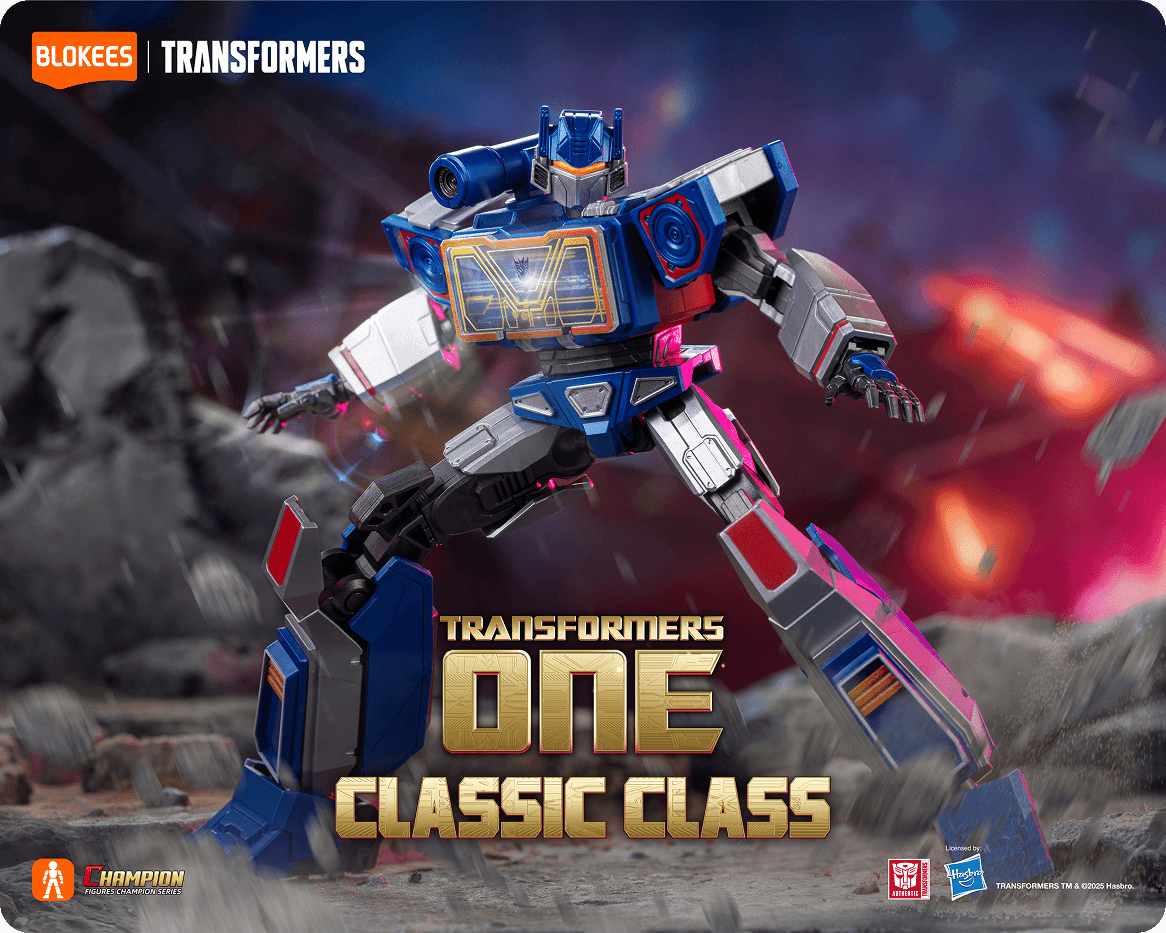
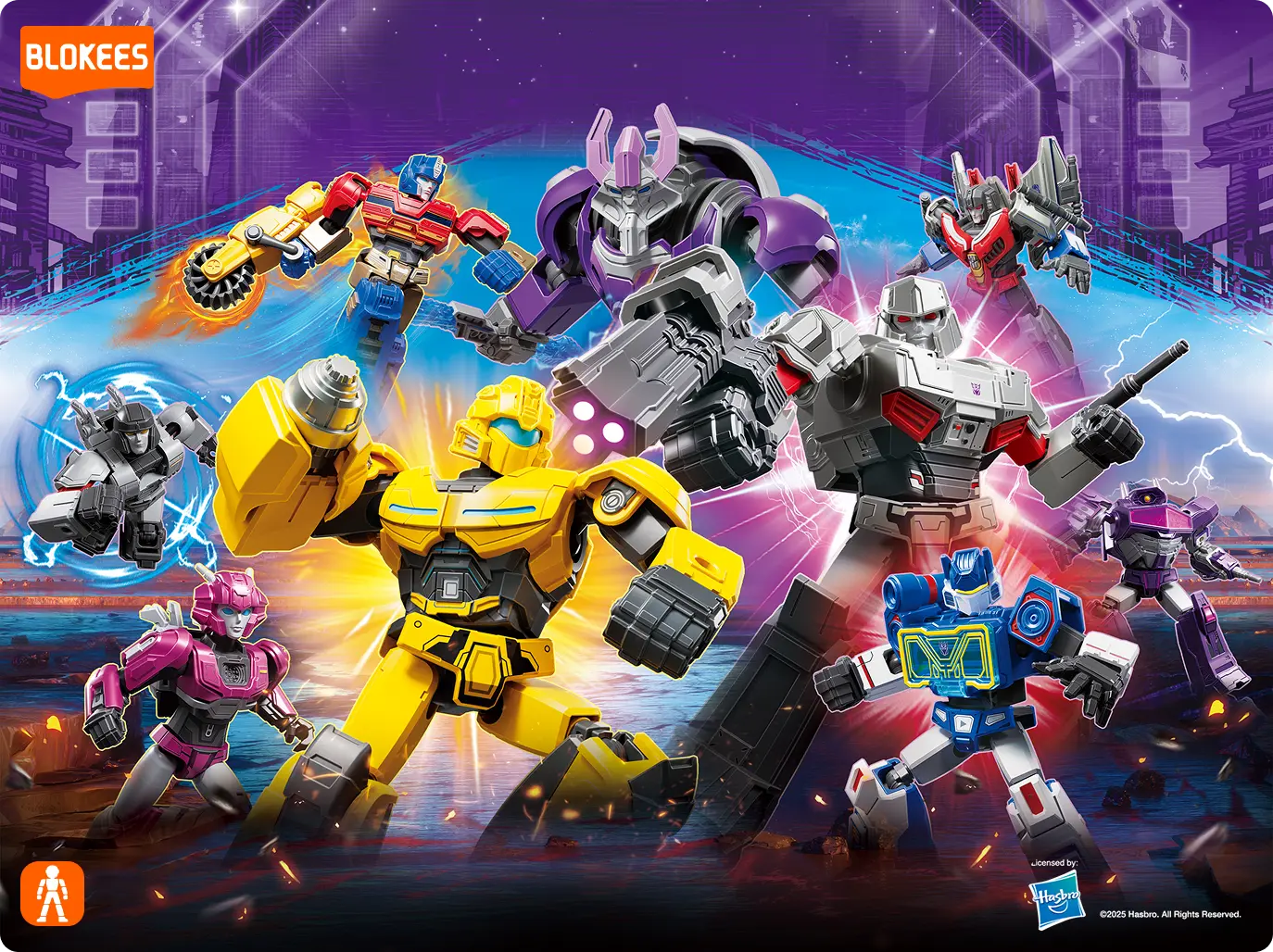
The broadest series in the Blokees Transformers lineup. Movie-era designs, Beast Wars characters, and Transformers One interpretations all sit together here. You can buy individual kits without committing to any wave structure or combiner plan. That flexibility is the Classic Class's defining advantage over everything else in the Blokees Transformers lineup — it's why most collectors start here, and why a release like theOptimus Prime Classic Class kit makes such a reliable first purchase.
Characters: Optimus Prime, Bumblebee, Megatron, Soundwave, Arcee, Starscream, Ironhide, Elita-1, Scourge, Sentinel Prime, Blitzwing, Megatronus, Shockwave, and more
Display tip: Individual picks on a single shelf level; compact footprint; mix any characters freely.
Galaxy Version
Wave-structured — display-first collecting
Designed so each kit in a wave visually complements the others. Collect a full wave and arrange it left to right: the result is a shelf that reads as a deliberate story rather than a random cluster. The Galaxy Version runs across multiple waves, and each new wave connects to the ones before it — browse the full lineup ofGalaxy Version wave sets to see how Roll Out, SOS, Autobot Run, and Fractured Space Time expand upon each other. For collectors who want the display to look considered, this is the right series to start with.
Characters: Multi-character wave sets — characters vary by wave
Display tip: Left-to-right story wall; a full wave is its own reward; plan horizontal shelf space before buying.
Defender Version
Decepticon-heavy + combining accessories
War-themed and Decepticon-aligned throughout, theDefender Version war-themed series includes combining accessories that link specific characters into larger joint display configurations — a feature no other series in the Blokees Transformers lineup offers at this level. It works particularly well as the antagonist half of a rivalry shelf: Classic Class Autobots on the left, Defender Version Decepticons on the right. The visual contrast is immediately strong.
Characters: Decepticon-aligned characters including Devastator combiner components
Display tip: Rivalry shelf pairing with Classic Class; combining configurations for larger, more dramatic displays.
Action Edition
G1 characters — maximum articulation
G1-era characters with a poseable joint system that allows for a wider display range than the Classic Class equivalents. Optimus Prime, G1 Megatron, Soundwave, and Orion Pax are all available in theTransformers Action Edition lineup. The difference in articulation range is noticeable — especially if you plan to rearrange poses on a regular basis. While G1 characters also appear in Defender Version at the compact 5.5cm scale, Action Edition is where G1 designs receive the most detailed premium execution — higher piece counts, richer articulation, and a deeper assembly experience. Choose this series if G1 fidelity and movement range matter more than character breadth.
Characters: Optimus Prime (G1), G1 Megatron, Soundwave, Optimus Prime Orion Pax, Tarn
Display tip: Expressive dynamic poses; wide stance range; best for collectors who repose regularly.
|
Surprise Box: A Surprise Box includes one randomly selected character kit from a named series pool. Review the character pool on the official product page before purchasing—you'll know what outcomes are possible without completely removing the discovery element. |
Planning Your Display Before You Buy

This is the section most collectors wish had existed before their first purchase. Display planning sounds like overthinking. It isn't—getting this right before you order saves money, shelf reorganization time, and a fair amount of frustration.
Three questions eliminate at least two series before you've even opened a product page. How much horizontal shelf space do you actually have? Do you want to collect characters you already know, or craft a visual story across a wave? And are you committing to one series at a time, or happy to mix?
|
You want... |
Start with this series |
|
A specific named character on your desk |
Classic Class — widest roster, individual purchase, no wave commitment |
|
A shelf that tells a visual story |
Galaxy Version — wave format, left-to-right display logic, complete-wave satisfaction |
|
Decepticons specifically |
Defender Version — Decepticon-heavy with combining options |
|
Maximum posing range |
Action Edition — A wider articulation range than Classic Class, for displays that change as often as you do. |
|
The discovery element |
Surprise Box — one randomly selected kit from a named character pool |
|
Autobots vs Decepticons rivalry shelf |
Classic Class Autobots + Defender Version Decepticons on opposite sides |
One thing that consistently catches new collectors off guard: how much horizontal space a full wave actually occupies once the kits are assembled and properly spaced for display. Classic Class kits are compact—several fit on a single shelf level. A full Galaxy Version or Defender Version wave needs significantly more room than the individual box suggests. Measure the actual shelf space before committing to a second wave.
How to Plan Your Shelf Before Purchasing
|
1 |
Measure your actual shelf space Get the exact horizontal measurement in centimetres. Don't guess. A full Galaxy Version wave typically needs 60–80cm of linear space when kits are properly spaced. |
|
2 |
Decide: character-first or display-first Character-first collectors are happiest with Classic Class. Display-first collectors are happiest with Galaxy Version. This single decision eliminates half the series. |
|
3 |
Pick one series to start Starting with two series at once creates decision paralysis and a shelf that doesn't commit to either aesthetic. Pick one, complete a wave or small grouping, then reassess. |
|
4 |
Buy one kit before committing to a wave The best way to know if a series is right for your display is to hold one assembled kit. Most collectors who try this end up expanding the series. Some redirect. Either outcome is better than a full-wave purchase that misses. |
|
5 |
Plan the rivalry side in advance If you're crafting a rivalry shelf, decide which Autobot series faces which Decepticon series before purchasing either. The visual contrast works best when the series are deliberately matched. |
Assembly and Display — What to Expect
Snap-fit throughout the entire Blokees Transformers lineup. No tools, no adhesives, no painting. Most kits assemble in a single sitting of 20 to 40 minutes depending on complexity and how carefully you position each joint connection during initial assembly.
A few things are worth knowing before you open the first box. The snap-fit connections click audibly when fully seated—if it doesn't click, it isn't connected correctly. The joint range on poseable kits is wider than the box photography suggests; keep the official product page open while assembling to see the full movement range documented for each part. And display stability varies with pose—low-center-of-gravity stances hold without support, while extended dynamic poses may benefit from the included stand.
Quick Assembly Checklist
- No tools or adhesives required — snap-fit throughout
- Snap connections click audibly when fully and correctly seated
- Keep official product page open to reference full joint articulation range
- Most kits fully assemble in 20–40 minutes in a single sitting
- Low-stance poses hold unsupported; dynamic extended poses use the included stand
- Snap connections hold through repeated pose adjustments without loosening
Conclusion
Four decades of kit design show up clearly in the Blokees Transformers lineup. The Classic Class covers the full character history—G1 through Transformers One—in individual snap-fit model kits with no wave pressure. The Transformers Classic Class lineup is the lowest-friction entry point for most collectors: wide character selection, individual purchase options, no requirement to complete a wave.
The Galaxy Version and Defender Version serve a different goal. Both are designed for collectors who want the shelf to look finished—either a cohesive wave wall or a rivalry arrangement with Autobots and Decepticons facing each other from opposite sides. Start with Wave 1 of either and decide after completing it whether to continue the same series or cross into another.
Pick the series that matches how you already think about collecting. Get one kit first. Assemble it, pose it, put it somewhere you'll actually see it. Then decide where to go from there. That's the pattern most Transformers collectors end up following regardless of how they start.
FAQs
When did the Transformers toy line first launch?
The Transformers toy line launched in 1984 with character kits adapted from two Japanese toy lines—Diaclone and Micro Change. The roster had grown to over 100 characters by the late 1980s, supported by a syndicated animated series and a Marvel Comics run.
What types of Transformers collectible kits does Blokees offer?
Blokees offers character-specific model kits (Classic Class, Action Edition), wave-based series sets (Galaxy Version, Defender Version), Complete Sets for full wave lineups, and Surprise Box options for randomized character selection. The Transformers Classic Class lineup has the widest character selection for collectors buying individually.
What is a Surprise Box?
A Surprise Box contains one randomly selected character kit from a named wave or series pool. Check the official product page before purchasing to see which characters are in the current selection—knowing the possible outcomes makes the experience less uncertain without removing the discovery element.
Who is the largest character in the Transformers universe?
Unicron is the largest character in Transformers lore—a planet-sized entity that first appeared in the 1986 animated film and has appeared across animated series, comics, and films since. Several collector editions have been produced to represent him at display scale.
Do Blokees Transformers kits require tools or adhesives to assemble?
No. Every kit in the Blokees Transformers lineup uses snap-fit assembly—no tools, glue, or paint required. Full assembly instructions and articulation range details are available on each official product page.
What is a Complete Set?
A Complete Set covers the full character roster from one series wave in a single purchase. It's suited for collectors who want a cohesive display from the start rather than purchasing each kit individually across multiple orders.
Which series is best for a first-time Transformers kit collector?
The Classic Class is the most practical starting point—it has the widest roster, individual purchase options, and no wave format to commit to. Start with one character you already know and decide where to expand from there.
Who betrayed the thirteen original Primes in Transformers lore?
The Fallen—originally one of the thirteen Primes—betrayed the others and became one of the key model kits in the origins of the Autobot-Decepticon conflict. The character has appeared across multiple animated series, films, and the comics continuity.
Sources
- The Strong National Museum of Play — Transformers Enter the National Toy Hall of Fame, National Toy Hall of Fame — Transformers, 2024.
- TFWiki — Transformers: Generation 1 (toy line), comprehensive franchise history documentation, Bob Budiansky, original Marvel Comics Transformers writer — character naming and backstory development documentation, Bob Budiansky — interview reference, April 2019.
- Paramount Pictures Animation — Transformers One, official film production press release, Transformers One — official press kit, September 2024.


Looking for something else?
Which Marvel Rivals Blokees Kit Should You Assemble First?
LEARN MORE
Best X-Men Model Kits: Wolverine, Magneto, and More
LEARN MORE
How to Assemble Blokees Marvel Rivals Spider-Man
LEARN MORE
Unboxing the Blokees Marvel Rivals Champion Class Series
LEARN MORELooking for something else?
Dynamic Posing Guide: How to Make Spider-Man Swing
LEARN MORE
Secret Rares Revealed: Blokees Marvel Rivals Hidden
LEARN MORE
How to Create a DIY Marvel Rivals Battle Diorama Display
LEARN MOREYou may also like


Further reading

Blokees EVANGELION Gift Guide: Choose by Character, Unit, and Display Format

EVANGELION 30th Anniversary: How the Series Continues to Reach Audiences