

Transformers G1 vs. Movie Universe: What’s the Difference?

Ask a Transformers fan which era they prefer and you’ll get an opinion within about four seconds. That’s how strong the feeling runs on both sides.
Blokees Transformers lineup covers both—G1-era kits and movie-era designs sit in the same catalog. So the comparison is genuinely useful here: G1 and the Movie Universe use the same core character names, but they mean different things in practice. The design language is different. The story tone is different. What you get on your shelf is different. This article explains each one and then helps you decide which style actually fits your collection goals.
Short version: G1 is the original template, forged for clarity and immediacy. The Movie Universe is the cinematic reinterpretation, crafted for scale and realism. Neither one is wrong.
What Does “Transformers G1” Mean?

The original toy line and cartoon era
G1 stands for Generation 1—the original Transformers era. The toy line ran from 1984 to 1990 in the US. The animated series aired from 1984 to 1987. Both were simply called “The Transformers” at the time. The G1 label came later, when fans needed a way to separate the original era from the sequels and spinoffs that followed it.
What G1 actually gave the franchise was its mythology. Optimus Prime and Megatron as specific, named characters with specific personalities and a specific ongoing conflict. Bumblebee as the small Autobot everyone remembers first. Soundwave as the most distinctive voice in the Decepticon lineup. Starscream as the franchise’s permanent answer to the question: what does unhinged ambition look like? These aren’t just toy designs. They’re archetypes. And they’ve been the franchise’s reference point ever since.
Why G1 is still the baseline for many fans
The franchise’s 2024 induction into the the 2024 Toy Hall of Fame inductees announcement confirmed what longtime fans already knew: G1’s visual and emotional language is what put Transformers in the cultural record. Every later version of these characters—every reboot, every new film, every new kit design—positions itself in relation to G1.
That’s why G1 stays relevant. Not because it’s old, but because it established the terms of the conversation. When someone redesigns Optimus Prime, the question fans immediately ask is: does it feel like Prime? That “Prime feeling” comes from G1.
What Is the Transformers Movie Universe?

From the 2007 live-action film onward
The Movie Universe started in 2007 with the first live-action Transformers film. That film alone changed what most people outside the fan community think Transformers looks like—because for a whole generation of viewers, it was their first real exposure to the franchise. Five films followed in the same continuity over the next decade, along with Bumblebee and Rise of the Beasts, which moved in slightly different directions while still occupying the same broad era.
Transformers 2007 model kits and Transformers Dark of the Moon kits in the Blokees Classic Class series reflect the movie-era character designs—Megatron and Bumblebee as they appeared on screen, not as they appeared in the 1984 cartoon. Collector response to both styles is genuinely strong, which tells you something about how durable both aesthetics are.
Why the movie versions feel so different from G1
The movies were designed for a live-action frame. G1 was designed for animation and for toys. Those are different constraints, and the resulting aesthetics really are different.
G1 needed characters to read clearly at small toy scale and in fast-moving cartoon frames. Bold colors. Simple silhouettes. Faces with expression. The Movie Universe needed robots to look like they could actually exist inside real-world footage. That meant dense surface layering, exposed internal structure, weathered surfaces, and proportions that felt massive and alien rather than clean and heroic.
G1 vs. Movie Universe: The Biggest Difference at a Glance

The comparison below covers the key differences across design, tone, and collecting appeal. It’s the fast-read version before we go into each character individually.
|
🟢 Transformers G1 |
🔵 Movie Universe |
|
|
Era |
Original 1984 toy and cartoon baseline |
Live-action film continuity from 2007 onward |
|
Visual style |
Bold silhouettes, solid color areas, instantly readable at distance |
Dense surface layering, exposed detail, mechanical realism — impressive but busier |
|
Story tone |
Archetypal faction war — clean, accessible, cartoon-scale conflict |
Earth-centered war drama — military involvement, destruction, blockbuster stakes |
|
Optimus Prime |
Classic red-and-blue cab-over silhouette. Calm, mythic, moral center. |
Heavily armored war leader. Same values, much more aggressive in combat. |
|
Megatron |
Sharp, iconic Decepticon commander. Reads as authoritative at a glance. |
More alien, more jagged. Harder to identify visually on first look. |
|
Kit appeal |
Nostalgia, clarity, iconic shelf presence, strong G1 silhouette |
Cinematic detail, engineering complexity, screen-accuracy for film fans |
How Optimus Prime Changes Between G1 and the Movies

Optimus Prime is the best character to use for this comparison because he’s in both eras, he’s the most familiar character in the franchise, and the differences between the two versions are extremely clear.
🟢 G1 Optimus Prime
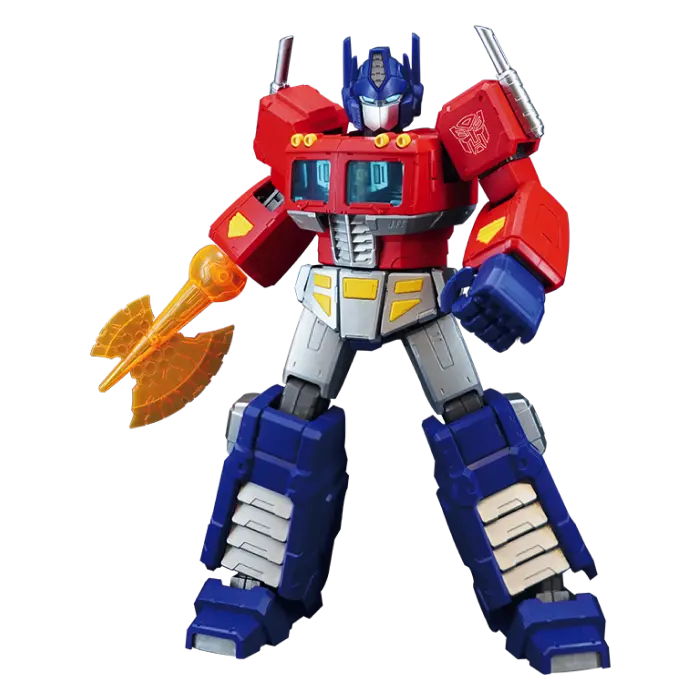
The G1 version is a cab-over truck in vehicle mode—flat-nosed, red and blue, instantly recognizable. In robot mode, the design is clean: broad shoulders, a solid chest plate, a face with a mouthplate and blue eyes. He looks like someone you’d follow into a fight. Calm. Grounded. The moral center of the franchise, and he looks it.
Kit example: Transformers Action Edition G1 Optimus Prime — G1 aesthetic, poseable joint design
🔵 Movie Optimus Prime
The movie version scans a long-nose truck and fills out in robot mode with layers of armor, exposed joints, visible mechanical complexity at every surface. He’s still recognizably Prime, but he’s heavier. More battle-scarred. The film versions push him toward being a front-line war commander rather than a mythic leader, and the design reflects that.
Kit example: Transformers Classic Class G1 Optimus Prime — also G1; movie Optimus appears in the 2007 and Dark of the Moon series
The Transformers Classic Class Optimus Prime and the Transformers Action Edition G1 Optimus Prime are both based on the G1 aesthetic—the broad chest, the recognizable profile, the clean color separation. If you want movie Optimus, look at the 2007 and Dark of the Moon entries in the Classic Class series instead.
Megatron, Starscream, and Soundwave: Why the Decepticons Feel Different
The G1 Decepticons are easier to discuss because they’re easier to read. You can identify each of them from a glance and explain their personality in a sentence. That’s good character design. The movie versions are often more visually impressive in a still frame, but they sacrifice some of that instant readability.

Transformers G1 Megatron
🟢 G1 Megatron
Silver, broad, and deliberately imposing. His robot mode reads as command. The original G1 design is one of the cleanest villain silhouettes in the franchise’s history—you know immediately who he is and what he represents. Strong color contrast against Optimus Prime makes them visually oppositional in a way that works on a shelf and in a cartoon frame equally well.
G1 visual logic: authority communicated through clarity
🔵 Movie Megatron
More alien. Jagged surfaces, asymmetric proportions, a face that reads as threatening rather than commanding. The movie version is harder to identify on first look. He’s designed for a blockbuster sequence where he’s emerging from shadow or crashing through a structure, not for a clean character introduction in a cartoon lineup.
Movie visual logic: threat communicated through chaos and scale
Transformers G1 Starscream

Starscream’s G1 design is one of the most consistent in the franchise’s history. Red, white, and blue jet mode. Wings mounted on the shoulders in robot mode. Null-ray cannons on the forearms. Visually, he reads as the second-in-command who’s always positioning himself slightly ahead of where he should be. The Transformers Classic Class Starscream kit captures that profile—tall wings, angular face, immediately recognizable posture.
Movie Starscream keeps the personality but loses the clean silhouette. The F-22 mode looks more realistic, but the robot mode is busier. In a film, that works because he’s in motion. On a shelf, G1 Starscream reads faster.
Transformers G1 Soundwave

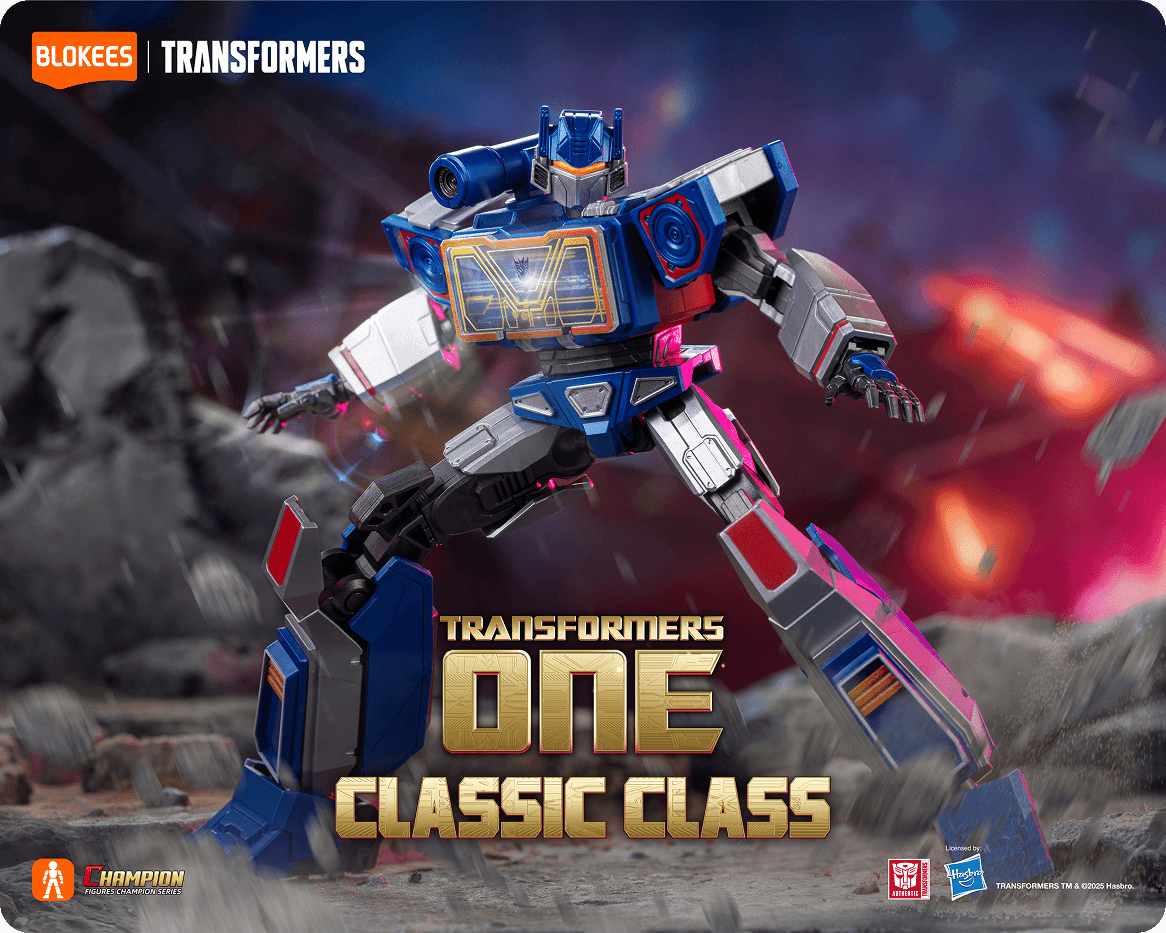
Soundwave is probably the clearest example of why G1 design logic wins on shelf presence. He’s blue, boxy, and has a visor and a mouthplate. That combination has been immediately recognizable for forty years. There’s nothing complicated about the design—every part of him tells you who he is.
The Transformers Classic Class Soundwave kits hold that G1 visual identity. The movie-era Soundwave versions lose it almost completely. He appears as a satellite in the second film and a silver vehicle in the third. Both are threatening in context—but neither one has the instant “oh, that’s Soundwave” read that G1 gets.
Devastator and Combiner Teams: G1 Simplicity vs. Movie Spectacle

Devastator is where the difference between the two eras is most visible as a collector experience, not just as a visual preference.
🟢 G1 Devastator
Six Constructicons combine into one humanoid robot. Green and purple throughout. Each individual vehicle has a clear function. Scavenger is the excavator. Scrapper is the front-loader. Bonecrusher, Hook, Long Haul, and Mixmaster complete the set. Assembled, Devastator reads as a character—not just as a large object. The modular logic is clean and satisfying both as toy engineering and as display.
Display logic: six readable parts + one iconic combined form
🔵 Movie Devastator
The film version is massive and quadrupedal, forged to wreck a pyramid sequence cinematically. It works in the film. As a design, it’s more monster than character. The scale is impressive but the character clarity is almost entirely gone. As a display piece, it’s a spectacle—but it doesn’t have the modular readability that makes G1 Devastator so satisfying for collectors.
Display logic: scale and motion — best understood in the film context
The Blokees Defender Version carries the war-heavy Decepticon aesthetic that leans movie-era rather than G1 in tone and visual density. The Classic Class series holds the cleaner G1-style character silhouettes. Both are available—the choice between them is a genuine design preference.
Character Design: Why G1 Looks Cleaner and the Movies Look Busier
This is the single most important difference to understand before buying. The two eras have completely different priorities in design, and those priorities affect how kits look on a shelf.
|
Design element |
🟢 G1 approach |
🔵 Movie approach |
|
Silhouette |
One strong shape. Works at distance. Recognizable from any angle. |
Complex shape with many competing visual elements. Better at close range. |
|
Color |
Bold solid areas. Color does the work of telling you who you’re looking at. |
Muted with surface variation. Color is atmospheric rather than identifying. |
|
Face design |
Expressive. Mouthplates, visors, clear facial reads. |
Often more alien. Less expressive. Forged for intimidation. |
|
Surface texture |
Clean and flat. The shape is the design. |
Dense layering, exposed joints, weathered surfaces. Realistic but busy. |
|
Shelf impact |
Immediately iconic. Each kit has a distinct visual identity from the others. |
Impressive up close. Harder to distinguish between characters at distance. |
There’s no wrong answer here—it genuinely comes down to what you want the shelf to do. G1 gives you a lineup where each character reads instantly and the overall arrangement looks clean and considered. Movie-era designs give you something that looks more cinematic and imposing. Both work. They just work for different reasons.
Story Tone and World‑crafting: Cartoon Adventure vs. War Movie Energy

Why G1 feels more archetypal and accessible
G1 storytelling is broad and direct. Autobots are heroes. Decepticons want power. The war has been going on for millions of years and it’s now happening on Earth. That’s the whole premise, delivered in the first two episodes, and the show never really needs to add more foundational complexity because the characters are interesting enough to carry it. As Transformers at The Strong National Museum of Play notes, the franchise’s appeal has always been rooted in this mythology—the story is a starting point for imagination, not a complete object.
That accessibility is part of why G1 holds up as a collector reference. You don’t need forty years of continuity knowledge to look at G1 Optimus Prime and understand what he represents. The character communicates immediately.
Why the Movie Universe feels more grounded, explosive, and human-centered
The films shift the center of gravity. Human characters matter a lot. Earth’s military is involved. The consequences of the Cybertronian war are felt in real cities. As Josh Cooley on the origin of Optimus Prime and Megatron put it when discussing the franchise’s screen history, the live-action approach is about making the conflict feel real and personal rather than mythic and archetypal. That’s a different goal, and it produces a different kind of story.
Neither approach is inherently better. G1 gives you mythology. The movies give you stakes that feel physically grounded. Depending on what you came to Transformers for, one of those will feel more satisfying than the other.
Transformers G1 Toys vs. Movie Toys: What Collectors Usually Prefer
Why Transformers G1 kits still define the classic shelf look
The Transformers Classic Class series is where most collectors start when they want a G1-style shelf. Optimus Prime, Megatron, Soundwave, Starscream, Arcee, Ironhide—the G1 cast is wide and the individual kits are designed around the character silhouettes that made the franchise iconic. Clean color areas, recognizable profiles, strong individual identities.
G1 kits win on shelf clarity. Put five G1-style kits in a row and you can name each character without looking at the bases. That’s the design doing its job.
Why movie-era kits appeal to fans who want realism and screen detail
Movie-era kits attract collectors who want something more cinematic. The surface complexity is the point—dense layering, visible joint structure, the sense that a small amount of real engineering is happening in the design. For fans who connected to Transformers through the films rather than the cartoon, this style feels more authentic.
The Defender Version series and the movie-era entries in the Classic Class sit in this territory. More surface complexity, heavier visual presence, stronger connection to the film aesthetic.
Which style is easier for new collectors to start with
G1 is genuinely easier to start with. Not because the kits are simpler to assemble—they use the same snap‑fit method—but because the design logic is clearer. You can look at a lineup of Classic Class kits and immediately understand what you’re working toward. The characters have distinct enough identities that each new addition changes the shelf in a way you can see and explain.
Movie-era kits work better once you already have a sense of what you want from the collection. The surface detail is more rewarding when you’re specifically seeking that cinematic look, rather than trying to learn the franchise through the shelf.
💡 Collector tip: G1 Optimus Prime facing movie-era Megatron is a surprisingly effective rivalry shelf—the clean heroic silhouette against the complex antagonist design creates visual contrast that actually works in both directions.
So Which One Is Better: G1 or the Movie Universe?
Neither. That’s the honest answer. But here’s the more useful version of the answer: which one is better for you, based on what you actually want from a collection.
|
|
Conclusion
G1 is the original template. The Movie Universe is the cinematic reinterpretation. They use the same core character names but they mean different things in design, tone, and collecting experience.
G1 gives you Optimus Prime as a moral archetype. The movies give you Optimus Prime as a front-line war leader. G1 gives you Soundwave as an instantly readable villain with a specific visual identity. The movies give you Soundwave as an alien presence designed to intimidate at scale. Neither is a lesser version of the character—they’re different answers to the same question: who is this and what does he stand for? Browse the Transformers Classic Class for G1-era character designs, and the 2007 and Dark of the Moon entries in the same series for movie-era designs. Both sit in the same lineup, which is a fair summary of where the franchise is right now.
Why Transformers entered the National Toy Hall of Fame is worth reading for a grounded account of why both eras carry weight. The answer is that the characters themselves are strong enough to survive redesign after redesign—and that’s exactly what makes the G1-versus-movie comparison interesting rather than just a nostalgia debate.
FAQs
What does Transformers G1 mean?
G1 stands for Generation 1—the original Transformers era from 1984 to 1990. The term came from fans who needed to distinguish the original toy line from later generations. It covers the classic toys, the 1984–87 animated series, and the character designs that became the franchise’s baseline.
Is G1 the original Transformers series?
Yes. In fan usage, G1 refers to the original era of the franchise—the toy line that launched in 1984 and the animated series that ran alongside it. It established the core Autobot and Decepticon characters and the visual identities that later versions still reference.
What is the Transformers Movie Universe?
The Movie Universe is the live-action film continuity that started with the 2007 film. It spans multiple films and is characterized by more mechanically complex robot designs, Earth-centered military storytelling, and a heavier, more realistic visual aesthetic than the original G1 era.
Is movie Optimus Prime different from Transformers G1 Optimus Prime?
Yes. G1 Optimus is a clean, mythic, cab-over truck design with clear color separation. Movie Optimus is heavier, more armored, and visually more intense. Both versions are in the Blokees lineup—see Transformers Classic Class Optimus Prime for G1 and the 2007 Classic Class series for the film version.
Why does Transformers G1 Megatron look so different from movie Megatron?
G1 Megatron is designed around a strong, readable silhouette—authoritative and instantly recognizable. Movie Megatron is designed for cinematic intimidation: more alien, more jagged, harder to identify at a glance. G1 prioritizes character clarity; the movies prioritize scale and threat.
Is Transformers G1 Starscream the same character as movie Starscream?
Same personality, very different appearance. G1 Starscream has a clean red, white, and blue jet mode and a consistently recognizable robot silhouette. Movie Starscream is a tan-grey F-22 design that’s more realistic but less instantly readable as the same character.
Why is Transformers G1 Soundwave more recognizable than the movie version?
G1 Soundwave has one of the clearest visual identities in the franchise—blue, boxy, visor and mouthplate, immediately identifiable from any angle. The movie versions change his form entirely, which makes him feel different rather than just redesigned.
What is the difference between Transformers G1 Devastator and movie Devastator?
G1 Devastator is six Constructicons combining into a humanoid character with clear modular logic. Movie Devastator is a massive quadrupedal creature built for cinematic scale. G1 is satisfying as a design and as a toy system; the movie version prioritizes spectacle over character readability.
Are Transformers G1 kits better for beginners?
Generally yes, because the character identities are clearer. G1-style kits have stronger silhouettes and distinct color layouts, which makes it easier to build a display that reads immediately. Movie-era kits work better for fans who already know what they’re building toward.
Which is better for collectors: G1 or the Movie Universe?
Neither is automatically better—it depends on what you want from your shelf. G1 wins on clarity, nostalgia, and iconic character identity. The Movie Universe wins on surface detail, cinematic presence, and engineering complexity. The most interesting collections often mix both.
Sources
Chris Bensch, The Strong National Museum of Play — It’s Transformational: Transformers Enter the National Toy Hall of Fame, National Toy Hall of Fame — Transformers entry, November 2024.
The Strong National Museum of Play — Transformers collection page, Transformers at The Strong National Museum of Play, September 2024.
Simon Thompson, The Credits / MPA — Josh Cooley on humanizing Optimus Prime and Megatron’s origin, Josh Cooley on the origin of Optimus Prime and Megatron, September 2024.
Angela Watercutter, WIRED — Transformers One Isn’t as Silly as It Looks, WIRED’s interview with the Transformers One director, September 2024.
Fandango Staff — The Transformers One Big Ticket Interview, Fandango’s Transformers One cast interview, August 2024.
The Strong National Museum of Play — 2024 Toy Hall Inductees Revealed, the 2024 Toy Hall of Fame inductees announcement, November 2024.


Looking for something else?
Which Marvel Rivals Blokees Kit Should You Assemble First?
LEARN MORE
Best X-Men Model Kits: Wolverine, Magneto, and More
LEARN MORE
How to Assemble Blokees Marvel Rivals Spider-Man
LEARN MORE
Unboxing the Blokees Marvel Rivals Champion Class Series
LEARN MORELooking for something else?
Dynamic Posing Guide: How to Make Spider-Man Swing
LEARN MORE
Secret Rares Revealed: Blokees Marvel Rivals Hidden
LEARN MORE
How to Create a DIY Marvel Rivals Battle Diorama Display
LEARN MOREYou may also like


Further reading

Blokees EVANGELION Gift Guide: Choose by Character, Unit, and Display Format

EVANGELION 30th Anniversary: How the Series Continues to Reach Audiences