


How Does Evangelion End? All Endings Explained
How does Neon Genesis Evangelion end? This question has puzzled and frustrated anime fans for nearly three decades. The series' conclusion remains one of the most controversial and debated endings in anime history.
The confusion stems from multiple factors: the original TV series ended with two abstract, experimental episodes that abandoned traditional storytelling. Director Hideaki Anno then created "The End of Evangelion" film to provide a more concrete conclusion. The manga offers yet another interpretation.
The TV Series Ending: Episodes 25-26
The original Neon Genesis Evangelion TV series concludes with episodes 25 and 26, which shocked audiences by abandoning conventional narrative for abstract psychological exploration.
What Actually Happens in Episodes 25-26
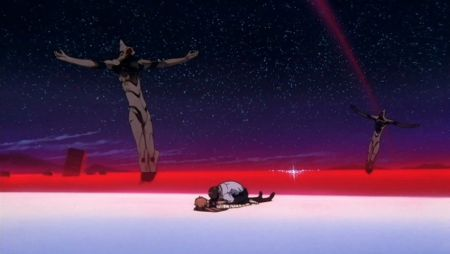
Instead of showing the final battle's outcome or resolving plot threads, these episodes take place almost entirely within Shinji's mind. They use minimal animation, still images, rough sketches, and philosophical dialogue.
Episode 25-26 Format:
- Takes place in abstract psychological space
- Uses text cards, diagrams, and rough sketches
- Characters discuss concepts directly to camera/viewer
- Explores alternative realities where Shinji's life differs
- Focuses on self-acceptance rather than external conflict
The episodes essentially function as Shinji's therapy session. Various characters help him work through his self-hatred, fear of rejection, and inability to connect with others.
The Instrumentality Sequence
Both episodes occur during Human Instrumentality—the merging of all human consciousness into a single being. This process eliminates the barriers (AT Fields) between individuals, ending loneliness but also destroying individuality.
What Instrumentality Means:
|
Concept |
Explanation |
|
AT Fields |
Barriers separating individual consciousness |
|
Instrumentality |
Merging all humans into unified consciousness |
|
Shinji's Choice |
Accept or reject merged existence |
|
Outcome |
Shinji chooses to maintain individual identity |
|
Resolution |
"Congratulations" scene suggesting acceptance |
During this process, Shinji must decide whether individual existence—with all its pain and loneliness—is worth maintaining, or if merging into collective consciousness offers better alternative.
The "Congratulations" Ending

Episode 26 concludes with all characters congratulating Shinji in a surreal sequence that sparked intense debate. After working through his psychological issues, Shinji tentatively accepts himself.
Final Moments:
- Shinji realizes he can change his self-perception
- Acknowledges he deserves to exist despite flaws
- Characters applaud and congratulate him
- Scene suggests internal acceptance and growth
- Ambiguous whether this happens "really" or symbolically
The ending deliberately leaves many questions unanswered. What happened to the Angels? What about SEELE's plans? How does the world survive? The series argues these external questions matter less than Shinji's internal journey.
Why This Ending Was So Controversial
Fans expected traditional narrative conclusion with battles, plot resolution, and clear outcomes. Instead, they received experimental psychological exploration that abandoned storytelling conventions entirely.
Viewer Reactions:
- Many felt confused and frustrated
- Some considered it brilliant psychological storytelling
- Production problems contributed (studio ran out of money)
- Anno received death threats from angry fans
- Debate continues about whether it's genius or cop-out
The controversy prompted Anno to create "The End of Evangelion" film, which shows what physically happened during episodes 25-26's psychological events.
The End of Evangelion Movie: Apocalyptic Conclusion
"The End of Evangelion" provides the concrete, physical ending many fans wanted. However, it's far darker and more disturbing than most expected, confronting viewers with uncomfortable imagery and themes.
Part One: Air/Love is Destructive
The film's first half shows SEELE's assault on NERV headquarters to seize control of Instrumentality. This sequence delivers brutal, visceral combat very different from the series' typical Angel battles.
Major Events in Air:
- SEELE's military forces massacre NERV personnel
- Asuka awakens and fights desperately against Mass Production Evas
- Shinji remains catatonic, unable to help
- Asuka's brutal defeat and psychological destruction
- Gendo begins his own version of Instrumentality
Asuka's battle sequence ranks among anime's most intense combat scenes. She temporarily overcomes her trauma and fights magnificently before being overwhelmed and torn apart by the horrifying Mass Production Eva units.
Part Two: My Pure Heart for You/One More Final: I Need You
The second half depicts Third Impact and Human Instrumentality's full execution. This apocalyptic sequence shows humanity's collective consciousness merging in graphic, disturbing detail.
Third Impact Sequence:
|
Stage |
What Happens |
Visual Representation |
|
Initiation |
Rei/Lilith triggers Impact |
Giant Rei appears worldwide |
|
Dissolution |
Humans dissolve into LCL |
People turning into liquid |
|
Merging |
All consciousness combines |
Abstract imagery, symbolic shots |
|
Shinji's Choice |
Reject or accept merger |
Internal dialogue sequences |
|
Outcome |
Shinji chooses individuality |
World reforms, possibilities return |
The imagery during this sequence is intentionally disturbing and uncomfortable. Anno wanted viewers to viscerally experience the horror of losing individual identity, not just understand it intellectually.
The Beach Scene: Ambiguous Resolution
The film concludes with Shinji and Asuka on a beach in the reformed world. This final scene remains intensely debated for its ambiguity and disturbing nature.
What Happens on the Beach:
- Shinji and Asuka are alone on desolate shore
- Shinji attempts to strangle Asuka
- Asuka touches his face tenderly
- Shinji breaks down crying
- Asuka's final words: "How disgusting" (or "I feel sick")
This ending provides no comfort or easy answers. It suggests that even after choosing individuality over merged consciousness, human connection remains painful and difficult.
Multiple Interpretations
The End of Evangelion's conclusion supports multiple interpretations, all potentially valid depending on viewer perspective.
Common Interpretations:
- Hopeful: Humanity gets another chance despite their flaws
- Pessimistic: Nothing changes; people remain unable to connect
- Neutral: Life continues with all its pain and possibility
- Meta: Commentary on fan/creator relationship toxicity
- Personal: Reflects Anno's own psychological state
Anno deliberately crafted an ambiguous ending that forces viewers to bring their own interpretation. There's no single "correct" reading.
How the Manga Ends: Yoshiyuki Sadamoto's Version

Yoshiyuki Sadamoto's manga adaptation, which ran from 1994 to 2013, provides a third version of Evangelion's ending. It maintains core themes while offering different resolution.
Key Manga Ending Differences
The manga follows the general story structure but diverges significantly in its conclusion, particularly regarding character fates and final outcomes.
Major Manga Differences:
- Kaworu appears earlier and has expanded role
- Shinji's character development follows different trajectory
- Instrumentality sequence presented differently
- Final outcome more concrete and less ambiguous
- Asuka's fate specifically altered from anime
The manga takes advantage of its longer development time to develop certain relationships and themes more thoroughly than the rushed TV production could achieve.
The Manga's Final Scenes
Sadamoto's conclusion provides more closure than either anime version while maintaining thematic consistency with the original vision.
Manga Ending Elements:
|
Element |
How It Differs |
Effect |
|
Shinji's Growth |
More pronounced development |
Character arc feels more complete |
|
Kaworu's Role |
Deeper friendship explored |
Adds emotional weight |
|
Instrumentality |
Clearer mechanics shown |
Easier to understand |
|
Resolution |
More definitive outcome |
Less ambiguous than film |
|
Final Tone |
Cautiously hopeful |
Suggests possibility of healing |
The manga ending appeals to those who found both anime endings too abstract or disturbing. It provides similar themes with more traditional narrative closure.
Why Three Different Endings?
Each version serves different creative purposes and responds to different circumstances and audiences.
Purpose of Each Version:
- TV Ending: Pure psychological exploration given production limits
- Movie Ending: Concrete events with confrontational themes
- Manga Ending: Long-form narrative with complete character arcs
None invalidates the others. They're complementary interpretations of core themes rather than competing versions of single truth.
Frequently Asked Questions
How does Neon Genesis Evangelion TV series end?
The TV series ends with episodes 25-26 taking place in Shinji's mind during Human Instrumentality. Through abstract psychological exploration, Shinji works through his self-hatred and tentatively accepts himself. The final scene shows characters congratulating him on choosing to maintain individual identity despite its pain.
How does The End of Evangelion movie end?
The End of Evangelion shows Third Impact occurring, with all human consciousness merging. Shinji ultimately rejects merged existence, choosing painful individuality over comfortable unity. The film ends with Shinji and Asuka alone on a beach, with Shinji attempting to strangle Asuka before breaking down crying.
How does the Evangelion manga end?
The manga by Yoshiyuki Sadamoto follows similar story structure but provides more concrete resolution. While maintaining core themes about choice and connection, it offers clearer character development and less ambiguous outcomes than either anime version.
Are the TV ending and movie ending both canon?
Yes, both are canon. The TV ending shows the psychological events during Instrumentality from internal perspective. The End of Evangelion shows the same events from external, physical perspective. They occur simultaneously rather than contradicting each other.
Why is Evangelion's ending so confusing?
The endings are intentionally confusing for several reasons: production constraints forced creative solutions, director Hideaki Anno wanted to challenge conventional storytelling, the themes are inherently complex and ambiguous, and Anno deliberately left interpretation open.
What does "Congratulations" at the end mean?
The "Congratulations" scene represents other characters acknowledging Shinji's difficult choice to accept himself and maintain individual existence despite its pain. It's both literal (characters in his mind supporting him) and metaphorical (celebrating psychological breakthrough).
Conclusion
How does Evangelion end? The answer depends on which version you watch, but all share core themes about choice, identity, connection, and accepting life's pain.
Key Takeaways:
- TV Ending: Psychological acceptance in abstract form
- Movie Ending: Physical apocalypse with ambiguous aftermath
- Manga Ending: Similar themes with clearer resolution
- Common Thread: Choice to embrace painful individuality
- Ultimate Message: Face reality rather than escape into fantasy


Looking for something else?

Which Marvel Rivals Blokees Kit Should You Assemble First?
LEARN MORE
Best X-Men Model Kits: Wolverine, Magneto, and More
LEARN MORE
How to Assemble Blokees Marvel Rivals Spider-Man
LEARN MORE
Unboxing the Blokees Marvel Rivals Champion Class Series
LEARN MORELooking for something else?

Dynamic Posing Guide: How to Make Spider-Man Swing
LEARN MORE
Secret Rares Revealed: Blokees Marvel Rivals Hidden
LEARN MORE
How to Create a DIY Marvel Rivals Battle Diorama Display
LEARN MOREYou may also like


Further reading

Blokees EVANGELION Gift Guide: Choose by Character, Unit, and Display Format

EVANGELION 30th Anniversary: How the Series Continues to Reach Audiences