

How Many Angels Are in Evangelion
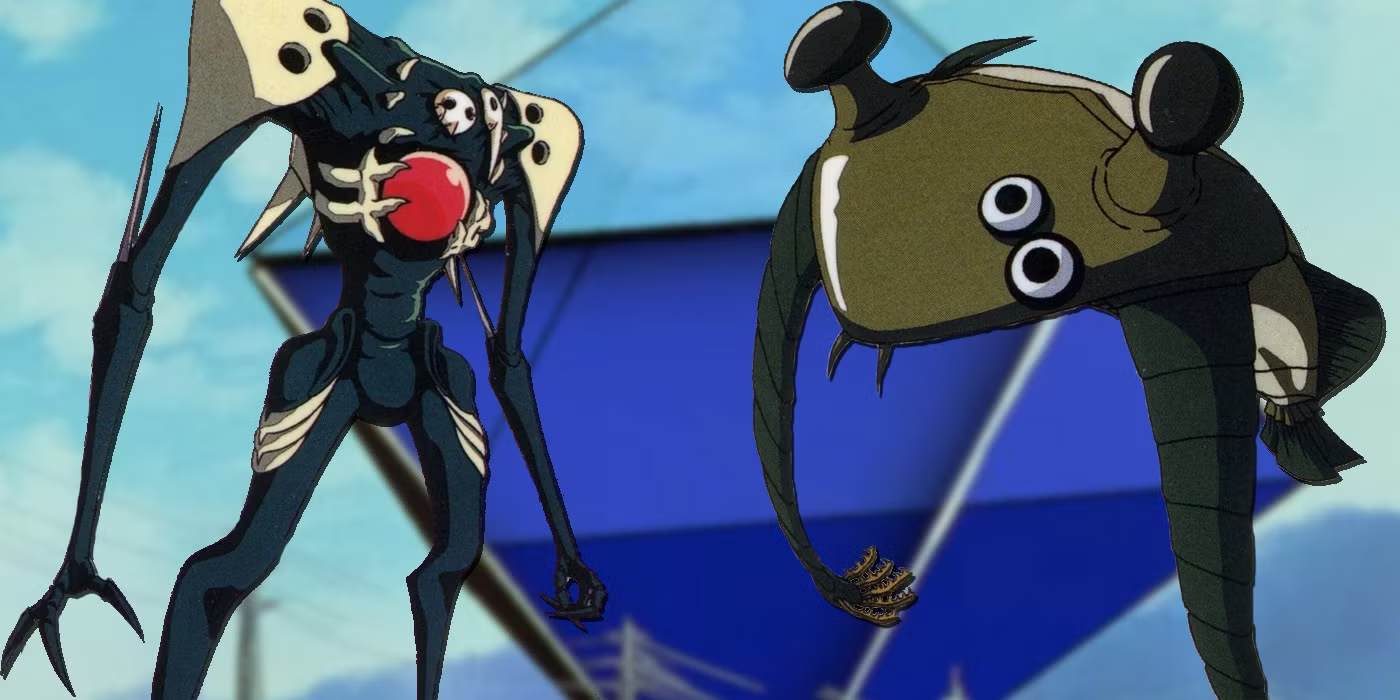
The Angels serve as the primary antagonists throughout Neon Genesis Evangelion. These mysterious beings arrive one by one to attack Tokyo-3, forcing NERV to deploy Evangelion units for humanity's survival. But exactly how many Angels appear in the series?
The original anime features 17 Angels total, though this number includes Adam and Lilith—the progenitor beings from which all others descend. Understanding each Angel's characteristics, abilities, and the battles they wage reveals the depth of Evangelion's mythology.
The Complete Angel Count

Neon Genesis Evangelion presents 17 Angels numbered from the First Angel to the Seventeenth Angel. However, only 15 of these actively attack Tokyo-3 during the series. Adam and Lilith represent the foundational beings rather than active threats during most of the narrative.
The numbering system follows the order established by SEELE and NERV based on their understanding of Angel classifications. This system organizes beings by their relationship to the progenitor entities and their appearance timeline.
Angel Categories:
- Progenitor Angels: Adam and Lilith (First and Second Angels)
- Combat Angels: 13 attacking entities (Third through Fifteenth Angels)
- Human Angel: Humanity itself classified as the Eighteenth Angel
- Final Angels: Kaworu and Rei in their Angel aspects
Complete Angel List with Details
|
Number |
Name |
Appearance |
Key Ability |
|
1st |
Adam |
Antarctica/NERV |
Source of all Angels |
|
2nd |
Lilith |
NERV Central Dogma |
Source of humanity |
|
3rd |
Sachiel |
Episode 1 |
Regeneration, AT Field |
|
4th |
Shamshel |
Episode 3 |
Energy whips |
|
5th |
Ramiel |
Episode 5-6 |
Particle beam, geometric form |
|
6th |
Gaghiel |
Episode 8 |
Aquatic combat |
|
7th |
Israfel |
Episode 9 |
Split into two entities |
|
8th |
Sandalphon |
Episode 10 |
Volcanic adaptation |
|
9th |
Matarael |
Episode 11 |
Corrosive acid |
|
10th |
Sahaquiel |
Episode 12 |
Orbital bombardment |
|
11th |
Iruel |
Episode 13 |
Nanomachine infection |
|
12th |
Leliel |
Episode 16 |
Shadow dimensional space |
|
13th |
Bardiel |
Episode 18 |
EVA possession |
|
14th |
Zeruel |
Episode 19 |
Overwhelming power |
|
15th |
Arael |
Episode 22 |
Psychic attack |
|
16th |
Armisael |
Episode 23 |
Fusion ability |
|
17th |
Tabris (Kaworu) |
Episode 24 |
Human form, piloting ability |
The Progenitor Angels
Adam - The First Angel
Adam originated from the White Moon discovered in Antarctica. This progenitor of all subsequent Angels triggered Second Impact when contact experiments went catastrophically wrong. NERV reduced Adam to an embryonic state and secured the remains deep within their headquarters.
All Angels from the Third onward originate from Adam's genetic template. They instinctively seek to reunite with their source, driving their attacks toward Tokyo-3 where they sense Adam's presence.
Lilith - The Second Angel
Lilith represents the source of terrestrial life and humanity. This progenitor arrived in the Black Moon that created Earth's largest impact crater beneath Tokyo-3. NERV crucified Lilith in the deepest level of their facility, disguising it as Adam to deceive both attacking Angels and SEELE.
Humanity descends from Lilith, making humans technically the Eighteenth Angel according to some classifications within the series mythology.
Early Angels and Their Battles
Sachiel - The Third Angel
The first Angel to attack Tokyo-3 after fifteen years of silence following Second Impact. Sachiel possessed remarkable regenerative abilities and could reshape its body after sustaining damage. This Angel's battle against EVA Unit-01 with Shinji's first deployment established the series' combat framework.
Shamshel - The Fourth Angel
Featured distinctive energy whips capable of cutting through structures and EVA armor. Shamshel's battle demonstrated the psychological toll on pilots, particularly affecting Shinji's confidence and willingness to continue fighting.
Ramiel - The Fifth Angel
Perhaps the most visually distinctive Angel, appearing as a massive blue octahedron floating in the sky. Ramiel possessed a devastating particle beam weapon capable of penetrating multiple layers of armor. Defeating this Angel required NERV's full power output diverted through a positron rifle.
Mid-Series Angel Encounters

Gaghiel - The Sixth Angel
The aquatic Angel attacking a naval fleet transporting EVA Unit-02. This battle introduced Asuka and showcased the vulnerability of EVA units in water without specialized equipment.
Israfel - The Seventh Angel
Unique among Angels for its ability to split into two separate but coordinated entities. Defeating Israfel required perfect synchronization between Shinji and Asuka, forcing them to train in coordinated combat routines.
Sandalphon - The Eighth Angel
Discovered in embryonic form within a volcano. NERV attempted capture for study, but Sandalphon matured rapidly under pressure. This Angel adapted to extreme heat and demonstrated Angels' ability to evolve beyond their initial forms.
Advanced Angel Threats

Matarael - The Ninth Angel
Appeared during a complete power outage at NERV headquarters. This spider-like Angel secreted powerful corrosive acid, forcing pilots to engage without standard support systems or power supplies.
Sahaquiel - The Tenth Angel
Attacked from orbit by dropping portions of its body as bombs while the main mass descended toward Tokyo-3. All three EVA units worked together to catch and destroy this Angel before impact.
Iruel - The Eleventh Angel
Took the form of rapidly evolving nanomachines that infected NERV's computer systems. This microscopic Angel represented a completely different threat type, attacking infrastructure rather than engaging in direct combat.
Late Series Angels
Leliel - The Twelfth Angel
Manifested as a shadow containing a pocket dimension called a Dirac Sea. When EVA Unit-01 fell into this space, it remained trapped until the unit went berserk and tore through dimensional barriers from within.
Bardiel - The Thirteenth Angel
Infected and possessed EVA Unit-03 during activation tests. This created the horrifying scenario of an EVA controlled by an Angel, forcing confrontation between corrupted Unit-03 and other EVAs with a pilot still inside.
Zeruel - The Fourteenth Angel
One of the most powerful Angels encountered, Zeruel broke through NERV's defenses and reached Central Dogma. This Angel defeated EVA Units 00 and 02 easily before facing Unit-01, which awakened and consumed Zeruel in berserk mode.
Arael - The Fifteenth Angel
Attacked from orbit using a psychic beam weapon that penetrated mental barriers rather than physical ones. This Angel traumatized Asuka by forcing her to confront repressed memories and psychological wounds.
Armisael - The Sixteenth Angel
Appeared as a luminous ring capable of fusing with and assimilating its target. This Angel attempted to merge with EVA Unit-00, forcing Rei to self-destruct to prevent further contamination.
The Final Angel
Tabris (Kaworu Nagisa) - The Seventeenth Angel
Unlike previous Angels, Kaworu possessed human form and consciousness. SEELE sent him to NERV as the Fifth Children, though his true nature as an Angel remained hidden initially. Kaworu could pilot EVA units without standard synchronization procedures.
His infiltration represented the most sophisticated Angel attack—one targeting NERV from within through deception rather than force. Kaworu's ultimate choice to allow his own death prevented Third Impact and demonstrated Angels' capacity for individual will.
Why Angels Attack Tokyo-3
Every Angel instinctively seeks reunion with Adam, whom they sense beneath NERV headquarters. They don't realize NERV concealed Adam's location while keeping Lilith in Central Dogma. This deception exploits Angels' inherent drive while protecting humanity's true progenitor.
Contact between any Angel and either progenitor would trigger Third Impact—an extinction-level event restructuring all life on Earth. NERV's mission centers on preventing this contact by destroying Angels before they reach Central Dogma's deepest levels.
Angel Characteristics and Abilities

Despite their diversity, all Angels share common features:
- AT Fields: Absolute Terror Fields serving as powerful defensive barriers
- Core: A vulnerable weak point usually protected by the AT Field
- Unique Abilities: Each Angel possesses distinct attack methods and characteristics
- Evolution: Capacity to adapt and change in response to threats
- Pattern Blue: A specific wave signature identifying them as Angels
Angels demonstrate intelligence varying from instinctive behavior to sophisticated strategic thinking. Later Angels show increasing awareness of EVA capabilities and NERV's defensive patterns.
Angels in Expanded Media
The reimagined films introduce different Angels with altered designs and abilities. Some original Angels appear redesigned, while entirely new Angels emerge in the alternate timeline. The total count and characteristics differ from the original series.
Various manga adaptations and video games expand Angel mythology with additional creatures and variations. These interpretations explore different aspects of Angel nature while maintaining core conceptual elements.
The Cultural Impact of Angels
Evangelion's Angel designs revolutionized how anime portrayed alien beings. Moving beyond humanoid or mechanical forms, the series presented genuinely alien entities with bizarre geometries and incomprehensible abilities.
Each Angel's unique appearance and combat style created memorable episodes focused on solving specific tactical problems. This variety maintained tension throughout the series while exploring different aspects of the human-Angel conflict.
Frequently Asked Questions
Why are Adam and Lilith counted as Angels?
The series mythology classifies all beings descended from Seeds of Life as Angels. Adam and Lilith represent the two Seeds that arrived on Earth, with Adam being the First Angel and Lilith the Second. All subsequent Angels originate from Adam, while humanity descends from Lilith, technically making humans the Eighteenth Angel.
Do all Angels have names?
Yes, though most names are revealed in supplementary materials rather than the anime itself. All Angel names derive from Judeo-Christian angelology, drawing from various religious texts and traditions. The naming convention emphasizes the series' religious symbolism and thematic depth.
Why do Angels look so different from each other?
Each Angel represents a different evolutionary possibility from Adam's genetic template. Their diverse forms reflect various approaches to achieving their goal of reaching Adam. This variety demonstrates the infinite possibilities of life and evolution from a single source.
Can Angels communicate with humans?
Most Angels show no interest in communication, acting purely on instinct to reach Adam. However, Kaworu demonstrates Angels can possess consciousness, language, and the ability to interact meaningfully with humans.
What happens if an Angel reaches Adam?
Contact between an Angel and Adam would trigger Third Impact, causing all life to revert to primordial form and merge into a single unified consciousness. This event would effectively end individual human existence and restructure all terrestrial life according to whichever progenitor initiated the contact.
Are there more Angels after the Seventeenth?
The original series concludes with Kaworu as the final Angel. However, humanity itself represents the Eighteenth Angel in some interpretations. The Rebuild films introduce additional Angels with different numbering and characteristics, expanding the mythology in new directions.
Conclusion
Understanding the complete roster of Angels enriches appreciation for Evangelion's complex mythology and strategic battles. Each creature presents unique challenges requiring different tactical approaches, making every episode's conflict feel fresh and unpredictable.
The series' enduring popularity stems partly from these memorable antagonist designs and the philosophical questions they raise about life, consciousness, and humanity's place in the universe. Collectors celebrating this groundbreaking franchise find popular assembly sets that honor beloved characters and iconic scenes across multiple generations of anime storytelling.


Looking for something else?
Which Marvel Rivals Blokees Kit Should You Assemble First?
LEARN MORE
Best X-Men Model Kits: Wolverine, Magneto, and More
LEARN MORE
How to Assemble Blokees Marvel Rivals Spider-Man
LEARN MORE
Unboxing the Blokees Marvel Rivals Champion Class Series
LEARN MORELooking for something else?
Dynamic Posing Guide: How to Make Spider-Man Swing
LEARN MORE
Secret Rares Revealed: Blokees Marvel Rivals Hidden
LEARN MORE
How to Create a DIY Marvel Rivals Battle Diorama Display
LEARN MOREYou may also like


Further reading

Blokees EVANGELION Gift Guide: Choose by Character, Unit, and Display Format

EVANGELION 30th Anniversary: How the Series Continues to Reach Audiences