


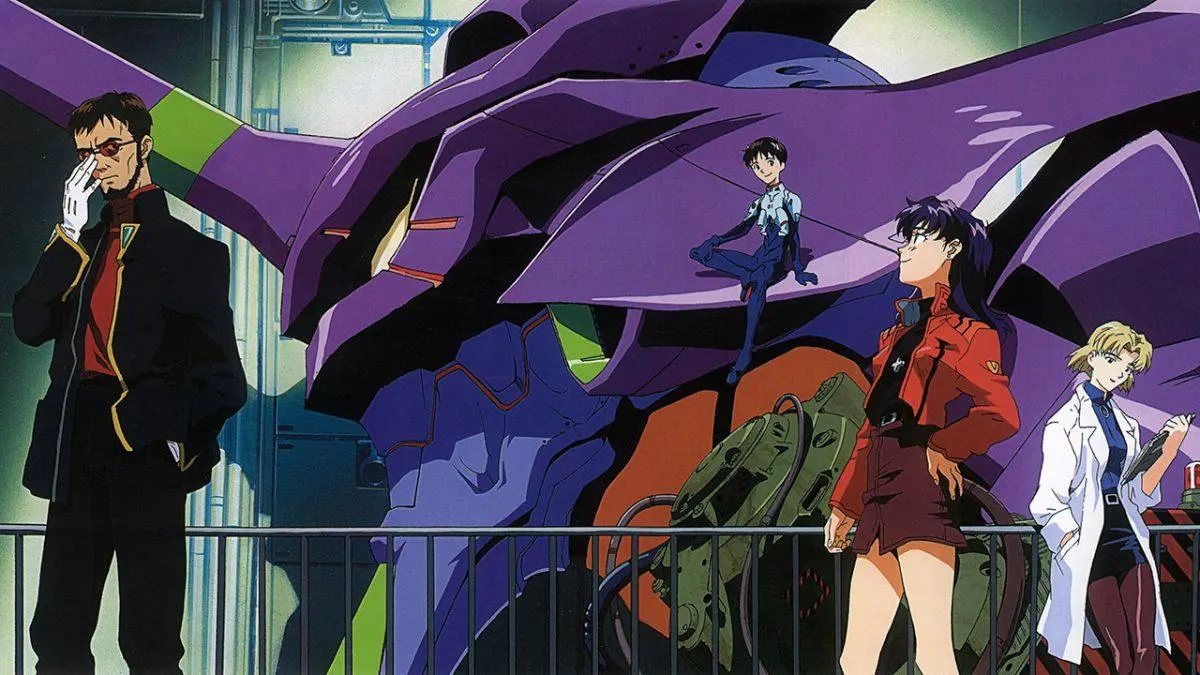
What Is Neon Genesis Evangelion About? A Complete Story Breakdown
What is Neon Genesis Evangelion actually about? On the surface, it's an anime about teenagers piloting giant robots to fight mysterious beings called Angels. But beneath that premise lies one of the most psychologically complex and philosophically dense narratives in anime history.
Created by Hideaki Anno in 1995, Evangelion starts as a mecha action series before gradually revealing its true focus: the internal struggles of damaged people trying to connect with each other. The show uses apocalyptic battles as a backdrop for exploring depression, trauma, identity, and the human need for connection.
The Basic Plot: What Happens in Evangelion

At its core, Evangelion follows 14-year-old Shinji Ikari, who's recruited by his estranged father to pilot a giant bio-mechanical weapon called an Evangelion. These machines are humanity's only defense against the Angels—powerful beings threatening to destroy civilization.
The Setting and Premise
The story takes place in 2015, fifteen years after a catastrophic event called the Second Impact killed half of humanity. The secretive organization NERV, led by Shinji's father Gendo Ikari, has constructed the Evangelions to combat the Angels.
Key Story Elements:
- Location: Tokyo-3, a fortified city constructed to fight Angels
- NERV: Secret organization defending humanity
- Evangelions: Giant bio-mechanical units synchronized with pilots
- Angels: Mysterious beings attacking in sequence
- Second Impact: Catastrophe that nearly destroyed humanity
Shinji reluctantly becomes an Eva pilot alongside two other teenagers: Rei Ayanami (a mysterious girl with connections to NERV's secrets) and Asuka Langley Soryu (a confident, skilled pilot hiding deep insecurity).
How the Story Progresses
The series begins with straightforward monster-of-the-week battles. Each Angel presents unique challenges requiring different strategies to defeat. However, the narrative gradually shifts focus from external battles to internal psychological struggles.
Story Arc Breakdown:
|
Episodes |
Focus |
Tone |
|
1-6 |
Introduction, early Angels |
Action-focused |
|
7-13 |
Character development, new pilots |
Balanced |
|
14-19 |
Psychological depth, relationships |
Increasingly dark |
|
20-24 |
Major revelations, mental breakdown |
Intensely psychological |
|
25-26 |
Abstract internal exploration |
Experimental |
As the series progresses, battles become less important than understanding why characters act the way they do. The show reveals that everyone involved carries deep trauma affecting their ability to connect with others.
Major Plot Revelations
The latter half reveals shocking truths about NERV's true purpose, the Evangelions' nature, and humanity's fate. These revelations recontextualize everything viewers thought they understood.
Critical Story Twists:
- Evangelions contain human souls, including Shinji's mother
- NERV is executing a secret plan called Human Instrumentality
- The Angels seek to trigger Third Impact, which would end humanity
- Gendo has personal motives beyond saving humanity
- Reality itself may not be what characters perceive
The Psychological Core: What Evangelion Is Really About

Strip away the robots and monsters, and Evangelion is fundamentally about loneliness, depression, and the difficulty of human connection. Creator Hideaki Anno channeled his own struggles with clinical depression into the narrative.
Depression and Mental Health
Shinji's character embodies clinical depression's core symptoms. He struggles with worthlessness, self-hatred, inability to connect with others, and paralyzing fear of rejection.
How Evangelion Depicts Depression:
- Constant negative self-talk and self-blame
- Avoidance of responsibilities due to fear of failure
- Difficulty accepting praise or love from others
- Running away when emotional pain becomes overwhelming
- Seeking validation while rejecting it simultaneously
The show doesn't romanticize or trivialize mental illness. It presents depression's grinding, daily reality with uncomfortable honesty. Shinji's struggles feel authentic because they reflect Anno's real experiences.
The Hedgehog's Dilemma
A recurring concept in Evangelion is the "hedgehog's dilemma"—a metaphor explaining why relationships are simultaneously necessary and painful. Like hedgehogs trying to share warmth in winter, people need closeness but hurt each other when they get too close.
Character Relationships Illustrating This Theme:
- Shinji and his father (abandonment and rejection)
- Shinji and Asuka (attraction mixed with hostility)
- Shinji and Rei (connection hindered by secrets)
- Misato and Kaji (past love complicated by present pain)
- Gendo and everyone (complete emotional isolation)
Every major relationship in Evangelion demonstrates how trauma prevents genuine connection. Characters desperately need each other but can't overcome their psychological barriers.
Identity and Self-Worth
The series constantly questions what defines individual identity. If we exist only in others' perceptions, do we truly have independent selves? This philosophical exploration intensifies throughout the series.
Identity Questions Evangelion Raises:
- Does self-worth require external validation?
- Can we truly know ourselves?
- Is identity fixed or constantly changing?
- Do we exist independently of others' perceptions?
- What happens if we merge all consciousness?
These questions culminate in the series' controversial final episodes, which take place almost entirely in characters' internal psychological spaces.
Episode 25: The Abstract Turn

Many viewers ask specifically about Episode 25 because it represents Evangelion's most radical departure from conventional storytelling. This episode essentially abandons traditional narrative for pure psychological exploration.
What Episode 25 Presents
Instead of showing battles or plot progression, Episode 25 takes place almost entirely in abstract space. It uses still images, text, rough sketches, and philosophical dialogue to explore Shinji's psyche.
Episode 25's Unique Approach:
- Minimal animation, mostly static images
- Direct psychological analysis of characters
- Philosophical and psychological terminology
- Questions directed at viewers themselves
- Abandonment of external plot entirely
This episode resulted from production constraints—the studio ran out of money and time. However, Anno transformed these limitations into bold artistic choices that served the story's psychological focus.
Why This Episode Matters
Episode 25 (and 26) force viewers to engage with characters' internal reality rather than external action. It's Evangelion's thesis statement made explicit: the psychological journey matters more than the physical one.
What Episode 25 Explores:
- Shinji's self-hatred and need for validation
- Alternative realities where characters have different lives
- The nature of identity and consciousness
- Whether happiness requires external change or internal acceptance
- How we construct self-image from others' perceptions
Some viewers consider these episodes brilliant psychological exploration. Others find them frustrating cop-outs. Both reactions are valid responses to Evangelion's deliberately challenging conclusion.
Major Themes Throughout the Series

Beyond individual episodes or films, Evangelion develops consistent themes across its entire runtime. Understanding these themes clarifies what the series is fundamentally about.
The Fear of Intimacy
Every character struggles with the terror of genuine connection. Their defenses against intimacy manifest differently but stem from the same fear of rejection and pain.
Character Defense Mechanisms:
- Shinji: Passivity and withdrawal
- Asuka: Aggressive independence and denial
- Rei: Emotional detachment and self-negation
- Misato: Forced cheerfulness hiding pain
- Gendo: Complete emotional shutdown
The series argues that these defenses, while protecting against hurt, ultimately cause greater suffering by preventing the connection humans need.
Existential Philosophy
Evangelion draws heavily from existentialist philosophy, particularly questions about meaning, choice, and authentic existence in an absurd universe.
Existential Questions:
|
Question |
How Evangelion Addresses It |
|
Does life have inherent meaning? |
No—we must create our own |
|
Can we escape loneliness? |
No—but we can accept connection despite pain |
|
Are we free? |
Yes—but freedom brings terrible responsibility |
|
What defines authentic living? |
Facing reality rather than escaping |
The series ultimately argues for accepting existence's painful aspects rather than seeking escape through fantasy, denial, or merged consciousness.
Religious and Mythological Symbolism
Evangelion famously uses Christian imagery, Jewish mysticism, and various mythological references. However, these serve aesthetic and thematic purposes rather than theological ones.
Symbolic Elements:
- Angel names from biblical and apocryphal sources
- Dead Sea Scrolls predicting events
- Tree of Life diagrams from Kabbalah
- Crucifixion and resurrection imagery
- Creation myth parallels
Anno has admitted much of this symbolism was chosen for visual impact rather than deeper meaning. The series is about human psychology, not religious commentary.
Why Evangelion Resonates with Audiences

Despite—or because of—its challenging nature, Evangelion became one of anime's most influential and beloved series. Its honest portrayal of mental health struggles connects deeply with viewers.
Authentic Emotional Representation
Unlike most anime protagonists, Shinji isn't heroic or aspirational. He's realistically damaged, making mistakes born from genuine psychological issues rather than plot convenience.
Why This Matters:
- Viewers with depression see their experiences reflected
- Mental illness portrayed without romanticism
- Characters feel like real people, not archetypes
- Emotional struggles prioritized over action
- No easy answers or simple solutions offered
For many fans, especially those struggling with mental health, Evangelion was the first media that accurately depicted their internal experience.
Cultural Impact
Evangelion fundamentally changed anime, demonstrating that the medium could handle complex psychological and philosophical content while remaining commercially successful.
Evangelion's Influence:
- Proved anime could explore mature themes seriously
- Inspired countless creators to take narrative risks
- Created new expectations for character depth
- Demonstrated commercial viability of challenging content
- Became cultural touchstone beyond anime fandom
The series' impact extends beyond anime into broader discussions of mental health, philosophy, and media criticism.
Collecting the Story: Physical Connections to the Narrative

For fans moved by Evangelion's story, collecting and model kits offers tangible ways to maintain connection with the narrative. These pieces represent specific moments and characters from the complex story.
Why Collect Evangelion Items
Physical collectibles create lasting bonds with stories that resonate emotionally. High-quality capture key moments, preserving the narrative in three-dimensional form.
Collection Benefits:
- Visual reminders of meaningful themes
- Appreciation for character and mechanical design
- Community connections with fellow fans
- Physical expression of emotional connection
- Support for continued franchise quality
Thoughtful collecting aligns with Evangelion's themes by engaging with fiction meaningfully without using it to escape reality.
Frequently Asked Questions
What is Neon Genesis Evangelion actually about?
Neon Genesis Evangelion is about teenagers piloting giant bio-mechanical weapons to fight mysterious beings called Angels. However, the surface action-story serves as framework for exploring depression, trauma, loneliness, and the difficulty of human connection.
Creator Hideaki Anno channeled his own struggles with clinical depression into the narrative, making it one of anime's most psychologically honest works.
What is The End of Evangelion movie about?
The End of Evangelion provides an alternative, more concrete ending to the TV series. It shows the apocalyptic Third Impact event while maintaining focus on characters' psychological states.
The film depicts what physically happens during the TV ending's abstract psychological exploration, offering closure while remaining thematically consistent with the series' focus on choice and human connection.
What happens in Episode 25 of Evangelion?
Episode 25 abandons traditional narrative for abstract psychological exploration. Using minimal animation, still images, and philosophical dialogue, it directly analyzes characters' internal states rather than showing external events.
This experimental approach resulted partly from production constraints but ultimately serves the series' emphasis on internal psychological reality over external action.
Is Evangelion worth watching despite the confusing ending?
Yes—Evangelion's journey matters more than its destination. The character development, psychological depth, and thematic exploration provide value even if the ending confuses or frustrates you.
Many viewers recommend watching the TV series, then The End of Evangelion film, and finally the Rebuild movies for multiple perspectives on the story.
What's the difference between the TV ending and The End of Evangelion?
The TV ending (episodes 25-26) takes place almost entirely in psychological space, using abstract imagery to explore internal acceptance. The End of Evangelion shows what physically happens externally during those same events.
Both endings are canon and complement each other—one focuses inward, the other outward, but both address the same themes of choice, connection, and accepting existence's pain.
Conclusion
So what is Evangelion truly about? It's about the struggle to exist authentically in a world where connection is both necessary and painful.
It's about depression, trauma, and the defenses we construct against intimacy. It's about choosing to engage with reality despite its pain rather than escaping into fantasy.
Core Takeaways:
- Surface plot: Teenagers fight monsters in giant robots
- True focus: Psychological struggles of damaged people
- Central theme: The hedgehog's dilemma of human connection
- Ultimate message: Accept existence's pain rather than escape it
- Cultural impact: Changed expectations for anime storytelling


Looking for something else?

Which Marvel Rivals Blokees Kit Should You Assemble First?
LEARN MORE
Best X-Men Model Kits: Wolverine, Magneto, and More
LEARN MORE
How to Assemble Blokees Marvel Rivals Spider-Man
LEARN MORE
Unboxing the Blokees Marvel Rivals Champion Class Series
LEARN MORELooking for something else?

Dynamic Posing Guide: How to Make Spider-Man Swing
LEARN MORE
Secret Rares Revealed: Blokees Marvel Rivals Hidden
LEARN MORE
How to Create a DIY Marvel Rivals Battle Diorama Display
LEARN MOREYou may also like


Further reading

Blokees EVANGELION Gift Guide: Choose by Character, Unit, and Display Format

EVANGELION 30th Anniversary: How the Series Continues to Reach Audiences