

 Blokees® Community




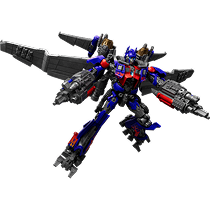
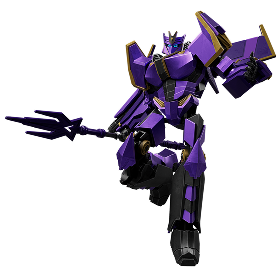
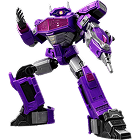
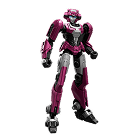
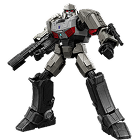
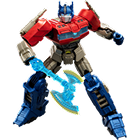
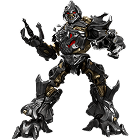
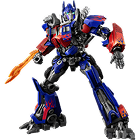
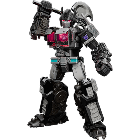
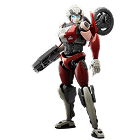
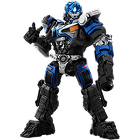
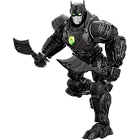
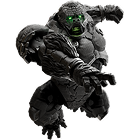
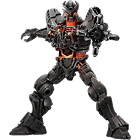
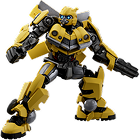


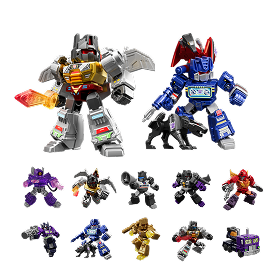
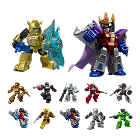
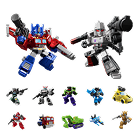


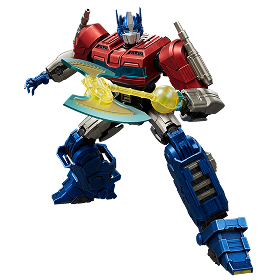

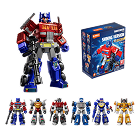
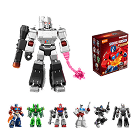

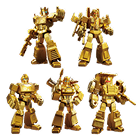



















The Evolution of Megatron: From Gun to Tank to Jet
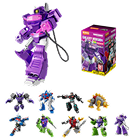
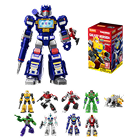
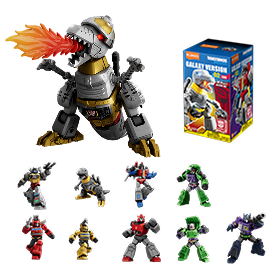
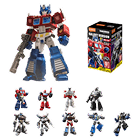
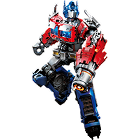
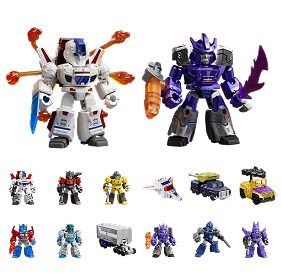
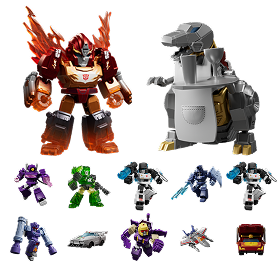
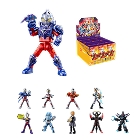
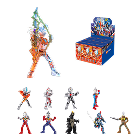
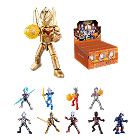
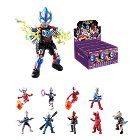
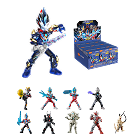
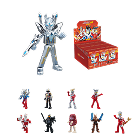
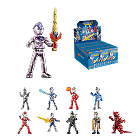
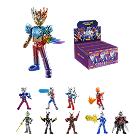
Megatron has had more alt-modes than almost any other Decepticon, and the choices aren’t random. Each one says something about what era of Transformers it belongs to, what the franchise thought power should look like, and what kind of threat Megatron was supposed to be. The Megatron model kits across the Blokees lineup cover several of these eras, which gives you a clean way to see the evolution on the shelf rather than just reading about it.
This article covers why Megatron's form changed, what each version was trying to say, and how Transformers One ended up giving the character the most interesting redesign of all—not just physically, but in terms of who he was before he became who he is.
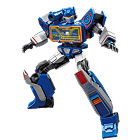
|
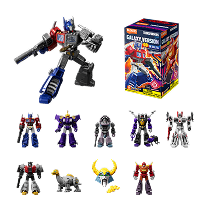
1984–1986 |
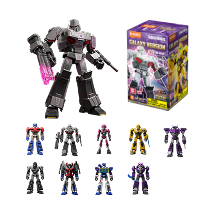
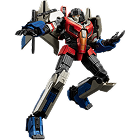
1990s–2000s |
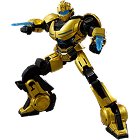
2007 films |
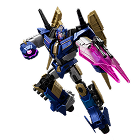
2024 |
Who Is Megatron, at the Core?

The Decepticon leader. Optimus Prime’s opposite. But those descriptions do the character a disservice if you stop there. Megatron isn’t just a villain because he’s on the wrong side. He’s a villain because he’s right about some things and wrong about everything he does in response to being right.
Cybertron’s caste system was corrupt. The society that Orion Pax believed in was worth criticizing. Megatron saw the same broken system and concluded that power was the only honest answer to it. That conclusion made him dangerous in a way that pure evil never is, because his origin makes a kind of sense. He’s a character built from legitimate grievance that curdled into something much worse.
|
Optimus Prime Leaders through service |
Megatron Leads through force |
|
A data clerk. A civilian. Someone who didn’t want leadership and had to grow into it. His authority comes from what he protects, not what he controls. |
A miner. A gladiator. Someone who clawed his way up through a system that put him at the bottom and decided the system itself had to be replaced. By him. |
That dynamic is why Megatron stays central regardless of continuity. The franchise needs the two of them to be in tension—not just fighting, but representing different answers to the same questions about power, justice, and how to fix what’s broken. Without Megatron, Optimus Prime is just a strong robot who wins. With Megatron, every victory carries some complexity.
Why Megatron’s Alternate Mode Matters So Much

In Transformers, alt-mode is character language. What you turn into tells the audience what kind of force you are. Autobots disguise themselves as Earth vehicles to blend in, which says something about their relationship to humans and survival. Megatron almost never cares about blending in. His forms are about power, not concealment.
The gun mode was a weapon you wielded. The tank is a vehicle you fear. The jet is something in the sky you can’t stop. Each form carries a completely different emotional register, which is why fans argue so much about which version is the “true” Megatron—they’re genuinely not the same character tonally, even if they’re the same name.
Toy safety rules pushed some of these changes. A realistic handgun is a harder sell in modern toy aisles than it was in 1984. But that’s not the whole story. Tank mode didn’t become dominant just because it was safer. It became dominant because it fit the character’s actual personality better than the gun ever did—Megatron doesn’t want to be wielded by someone else. He wants to be the one doing the wielding.
G1 Megatron — Why the Gun Version Became Iconic

|
1984–1986 |
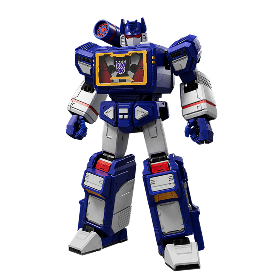
G1 Handgun Mode Walther P38 — The original. Nothing before. Nothing quite like it since. The G1 Megatron turns into a gun. Not a vehicle, not a machine with its own agency—a weapon held and aimed by someone else. That’s a strange choice for a villain who’s supposed to be the most dominant Decepticon. But it worked, and it worked specifically because of that strangeness. Megatron being wielded by Soundwave or Starscream gave the character a particular kind of menace—he trusted himself to become a tool in someone else’s hands, which says something interesting about control and ego. The gun mode implied Megatron understood that the most effective weapon isn’t the one that moves around on its own. It’s the one that can be aimed precisely. The design was also genuinely bold for 1984. Most Transformers at the time became vehicles, devices, or robots. Megatron becoming a functional-looking handgun had an adult, dangerous quality that made him feel categorically more threatening than the Autobots’ car forms. G1 Megatron feels like a world that was before anyone decided toy lines needed guardrails. |
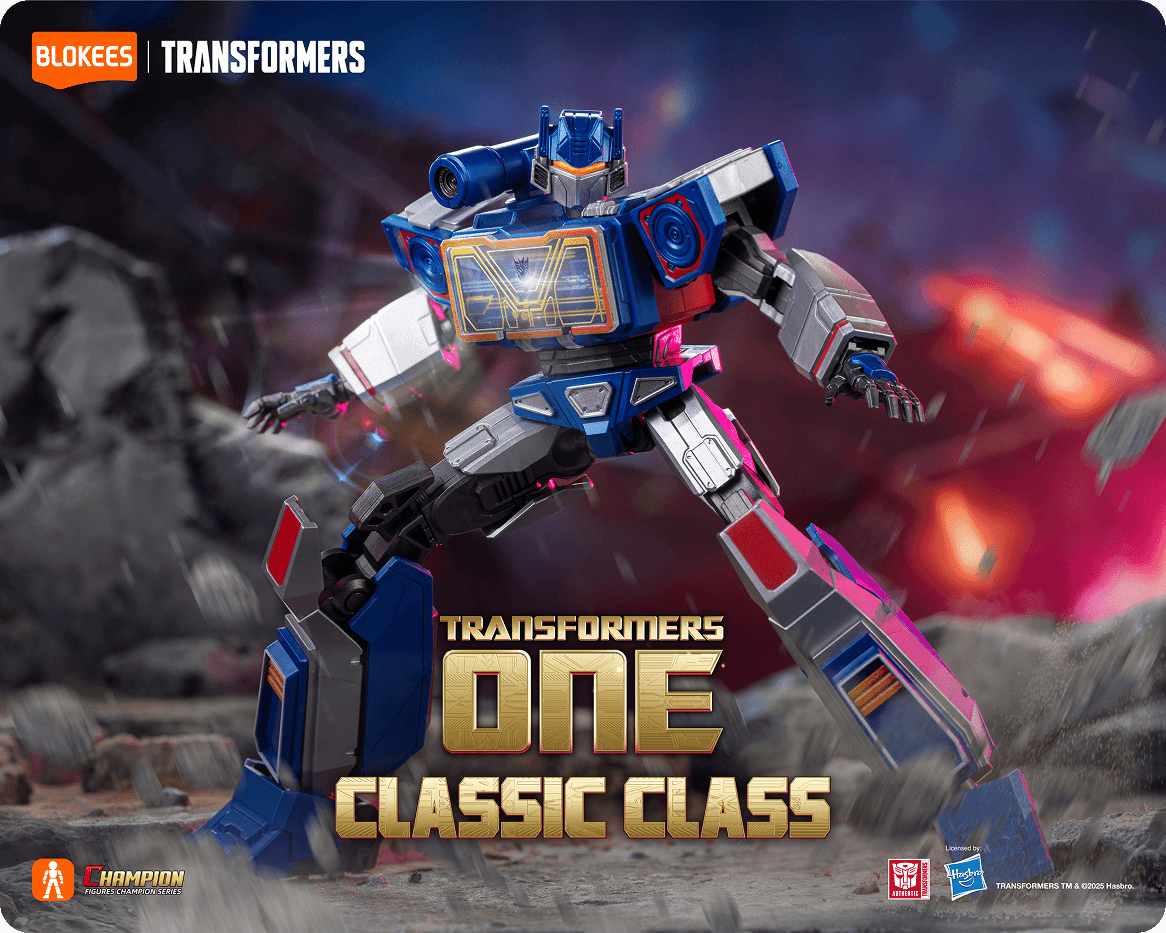
The reason the gun mode couldn’t last is obvious in hindsight. Stricter toy regulations, changing retail standards, and the practical problem of fitting a mass-displacement mechanism into a modern kit all made it unsustainable. The Transformers Classic Class One Megatron represents D-16 from Transformers One — a pre-Megatron design that borrows heavily from the classic G1 silhouette, including the bucket helmet and arm cannon, while presenting a younger version of the character before his full transformation into the Decepticon leader.
The G1 visual identity—the silver-gray coloring, the bucket helmet, the fusion cannon on the right arm—is the one that every subsequent Megatron references. Forty years on, it’s still the design fans use as a benchmark.
From Gun to Tank — How Megatron Became a Battlefield Weapon

|
1990s — 2000s |
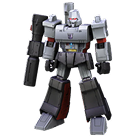
Self-contained war machine — no longer needs to be wielded by anyone. The tank is a better fit for Megatron’s personality than the gun ever was, honestly. The gun mode made him dependent on another Decepticon to aim and fire him. A tank Megatron is independent—armored, mobile, capable of dominating a battlefield on his own terms. That matches his "Peace through tyranny" worldview much more accurately. The transition also tracks a shift in how Transformers framed warfare. G1 was often about one-on-one standoffs and personality clashes. Later eras pushed more toward wide-scale military conflict, where a tank mode made visual and narrative sense. Megatron leading an armored advance is a different kind of image than Megatron being held like a sidearm. Tank mode became the modern default partly for safety reasons and partly because it worked. It gave the character direct battlefield presence without requiring another character to activate him, it scaled well to collector-grade versions, and it preserved the sense of armored authority that the character needed. Most war-era Megatron kits use some version of this form. |
The War for Cybertron Trilogy: Siege is probably the best example of tank-era Megatron done right in modern storytelling. He’s armored, forward, domineering—leading from the front rather than directing from a distance. The Siege design gives him battle damage and a Cybertronian tank form that feels like he’s been at war for a very long time, which is exactly right for that story.
From Tank to Jet — When Megatron Became Stranger and More Alien

|
2007 live-action films — present |
Aerial. Mobile. Harder to classify. More alien than any earlier version. The 2007 live-action Megatron introduced a Cybertronian jet form that looked nothing like an Earth vehicle, which was deliberate. The reasoning was direct: a director who didn’t want size-changing mechanics in the film needed an alt-mode that worked at Megatron’s actual scale, and a sleek Cybertronian jet accomplished that while making him feel more extraterrestrial than any G1-inspired design could. Jet mode also changed his threat profile. A grounded tank controls territory. A jet moves through it. Film Megatron as a Cybertronian jet felt faster, more predatory, less contained by geography. He wasn’t holding a front line—he was hunting. That suits some versions of his character better than others. Some fans don’t love jet Megatron, and that’s a legitimate position. The form feels less cohesive than either the G1 gun or the war-era tank. But it solved real design problems for the live-action context and introduced a visual language for Megatron that a lot of later non-film versions borrowed from—the jagged, almost biological-mechanical aesthetic that the films established became part of his contemporary design vocabulary. |
The Transformers 2007 Classic Class Megatron covers the film-era design specifically. It’s worth having alongside a G1-style Megatron if you want to see how much the visual language shifted between 1984 and 2007—the two versions barely look like the same character, even though they are.
Transformers One and D-16: The Most Important Version of Megatron in Years

|
2024 |
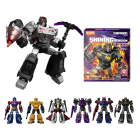
Origin. Not the finished villain — the person who became him. Transformers One does something no previous version of the character has done as effectively: it makes you care about who Megatron was before he became Megatron. D-16 is a mining worker, not a military commander. His friendship with Orion Pax is genuine, not a political alliance. The official Transformers One synopsis frames the film directly as the story of how two allies became sworn enemies, which is a framing that puts the burden on the relationship rather than just the ideology. The name D-16 before he takes the name Megatronus (and then shortens it) matters because it makes the renaming feel like a choice rather than an identity. He decides to become Megatron. That’s a heavier beat than most villain origin stories manage, because it means he’s not a product of circumstance—he’s someone who looked at what circumstance offered and chose a path that Orion Pax couldn’t follow. In terms of alt-mode, the Transformers One version gives D-16 a tank form that he receives after gaining his transformation cog—which makes the form part of the origin story rather than just a design choice. He becomes a tank the moment he gets the ability to become anything at all. That detail says something about who he already is by the time the film ends. |
The Transformers Classic Class Transformers One Megatronus covers the Megatronus character from the Transformers One origin story specifically. For fans who’ve seen the film, having this kit alongside any later Megatron version on the shelf makes for a striking before-and-after display.
How Different Transformers Eras Reinvent Megatron

Every major era of Transformers takes a swing at Megatron and most of them land differently. Here’s a quick map.
|
Era |
Primary form |
What this version is doing |
|
G1 |
Walther P38 |
Setting a villain identity that still defines the character four decades later. The fusion cannon. The bucket helmet. The theatrical voice. |
|
UnicronTrilogy |
Tank / jet variants |
Maximizing armament and scale. Triple changers, multi-mode designs, increasingly heavy military presence. Megatron as a weapons platform. |
|
Live-actionfilms |
Cybertronian jet / tank hybrid |
Alien menace over recognizable form. Megatron as something genuinely other—faster, stranger, more monstrous than any Earth-adjacent design. |
|
TransformersOne |
Tank (earned, not preset) |
Origin before identity. D-16 before he becomes Megatron. The form is a symbol of the moment he chooses who to be. |
What Megatron’s Changing Forms Say About the Franchise
Megatron’s evolution isn’t just character development. It’s a direct record of how Transformers has changed as a product, a story, and a cultural object.
Toy design pressure vs story logic
The G1 gun mode is the clearest case of a story choice being constrained by real-world product reality. You can’t keep making a realistic handgun toy for children indefinitely. Tank mode emerged partly from that constraint and partly because it was genuinely a better fit for the character. The two pressures—practical and narrative—happened to point in the same direction.
Jet mode is a different case. The cinematic era chose it primarily for scale and visual reasons. Whether it also fits the character better than tank mode is arguable. A lot of fans would say it doesn’t. But it solved design problems for the films and gave Megatron a visual identity that influenced how the character was drawn and packaged for a decade after the first film.
The move from realism to spectacle
The original franchise was built on the idea that these robots could hide among Earth objects. Megatron-as-handgun is deeply G1 in that way—it’s a specific, recognizable real-world object. By the time we get to Cybertronian jet Megatron, that pretense has been fully abandoned. The films decided that what made Transformers interesting wasn’t the disguise. It was the scale. The Transformers entered the National Toy Hall of Fame partly because of both things—the clever gimmick of the G1 era and the franchise-wide staying power that spectacle helped sustain.
Why evolution is part of what the character is
Megatron changes because the franchise changes. That’s not a weakness—it’s what keeps him from becoming a relic. Each era finds a new angle on the same core character: force, ego, conviction, and the specific kind of danger that comes from someone who is right about the disease and wrong about the cure. That character survives any redesign.
The Best Megatron Kits for Different Kinds of Fans

Which version of Megatron you want on your shelf depends almost entirely on which version of the character means the most to you. Here’s a breakdown by fan type.
G1 fans
TheTransformers Action Edition G1 Megatron is the only Blokees kit that covers the authentic G1 Megatron design. If what you want is the bucket helmet and fusion cannon in a poseable, shelf-ready format, that's the right starting point. The Action Edition articulation range is also wider than anywhere else in the catalog, which matters if you plan to repose the kit regularly.
Movie-era fans
TheTransformers 2007 Classic Class Megatron covers the film-era design in Classic Class format. If you want the alien, jagged aesthetic of the cinematic Megatron rather than the G1 style, this is the version to start with. The Classic Class 22 Dark of the Moon Megatron extends the movie-era coverage into the later films if you want to build out the full cinematic arc.
Transformers One fans
TheTransformers Classic Class Transformers One Megatronus kit covers the origin-era character — D-16 before the full Megatron identity. Worth pairing with an Optimus Prime kit from the same Transformers One era for the before-the-war contrast the film is built around.
Display collectors
For a multi-era Megatron display, running the Action Edition G1 Megatron next to the 2007 movie version and the Transformers One Megatronus gives you three completely different readings of the same character — browse theTransformers Classic Class collection for the cinematic and Transformers One takes, then cross to Action Edition for the G1 anchor. It's a good way to show forty years of evolution in a small amount of shelf space.
Why Megatron Still Works After All These Redesigns
Because the center of the character doesn’t move.
The form can be a gun, a tank, a Cybertronian jet, or a mining worker who becomes all of those things in sequence. What stays constant is the character underneath: someone who started from legitimate anger at a broken system and arrived at a place where the breaking is the whole point. That makes Megatron genuinely complex in a way that most franchise villains aren’t—not because he’s misunderstood, but because he understands some things correctly and draws catastrophically wrong conclusions from them.
Optimus Prime also works after forty years, but he works because he’s an ideal. Megatron works because he’s a warning. The franchise needs both, and the tension between them has survived every redesign, reboot, and re-origin because it’s not really about the alt-modes. It’s about two answers to the same question, and neither one has been proven definitively wrong yet.
That’s why fans keep accepting new versions of him. You can change the body. The argument underneath it keeps going.
Conclusion
The gun mode is still the one fans use as a reference point, even forty years later. The tank is the version that fits his actual personality best. The jet solved cinematic problems in ways that split the fandom. And Transformers One gave the franchise its most emotionally complex Megatron yet, not by redesigning the form but by showing you who existed before it.
Start with the most recognizableTransformers Classic Class Megatron if you're new to collecting. Add the Transformers One Megatronus if you've seen the film and want the before-the-war angle. The evolution of Megatron is really the evolution of the franchise's relationship with power — who has it, what they do with it, and whether any version of having it can be justified.
FAQs
Why did Megatron change from a gun to a tank?
Two reasons: toy safety regulations made the realistic gun mode harder to sustain, and tank mode was genuinely a better fit for the character—a self-contained war machine rather than a weapon that requires another Decepticon to aim him.
Is G1 Megatron still the most iconic version?
For most fans, yes. The G1 silhouette—bucket helmet, fusion cannon, silver-gray coloring—is the visual reference that every later version gets compared to.
Why is Megatron sometimes a jet?
The live-action films introduced a Cybertronian jet mode that solved scale and design problems for the cinematic context. It also made him feel more alien and predatory, which suited the films’ visual approach.
What is the difference between G1 Megatron and Transformers One Megatron?
G1 Megatron is already the fully formed Decepticon leader. Transformers One shows D-16 before he becomes Megatron—the origin story of the name, the identity, and what it cost both him and Optimus Prime.
Is D-16 the same character as Megatron?
Yes. D-16 is the designation given to Megatron before he takes the name. In Transformers One, his arc is specifically about how D-16 becomes the character audiences know from every other version of the franchise.
Which came first, Megatron toys or the cartoon version?
The toys came first in 1984, based on Japanese toy designs. The animated series followed quickly after to create a story and characters for the toy line.
Why does Megatron have so many alternate modes?
Because each era of Transformers uses him differently. Safety regulations, cinematic requirements, storytelling tone, and design aesthetics all changed across forty years, and Megatron’s alt-mode changed with them.
What is the best Megatron toy style for collectors?
That depends on which era matters most to you. G1-faithful designs work best for longtime fans. The Transformers One Megatronus is best for fans of the origin story. If you want the cinematic version, the 2007 Classic Class design is the most direct fit.
Is Megatronus the same as Megatron?
No. Megatronus Prime is a separate character—one of the Original Thirteen Primes from the franchise’s deep mythology. In Transformers One, D-16 admires Megatronus Prime and takes a version of the name before shortening it to Megatron.
Why does Megatron keep changing across different Transformers eras?
Because the franchise keeps reinventing itself, and Megatron is one of the characters it reinvents most often. The core—force, ideology, certainty, the specific kind of danger that comes from being half-right about a broken world—stays constant. The form changes to fit each era’s needs.
Sources
- Origin story framing, official site: official Transformers One synopsis, accessed April 2026.
- Hall of Fame and franchise history: Transformers entered the National Toy Hall of Fame, The Strong National Museum of Play, November 2024.
- War-era Megatron continuity: War for Cybertron Trilogy: Siege, Hasbro Newsroom, July 2020.


Looking for something else?
Are Wolverine Good? A Deep Look at Logan’s Place in Marvel
LEARN MORE
Why Can Captain America Lift Thor's Hammer
LEARN MORE
Is Deadpool an Anti Hero? Understanding Marvel’s Most Unusual Character
LEARN MORE
How Did Thor Lose His Eye? A Complete Marvel Explanation
LEARN MORELooking for something else?
When Was Deadpool Created: Origins, Comics, and Collectibles
LEARN MORE
Was Wolverine Born With Bone Claws: Origins and Facts
LEARN MORE
How Many Wolverine Movies Are There: Complete Guide
LEARN MOREYou may also like




Further reading

Autobots vs Decepticons: Logos, Mottos, and Key Differences

What is Marvel Rivals? The New Hero Shooter Explained